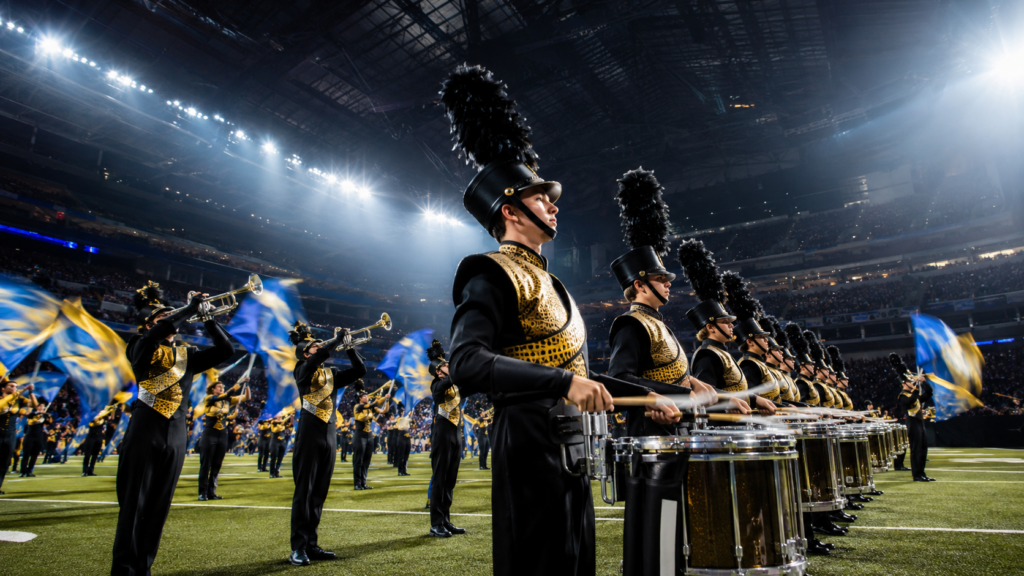
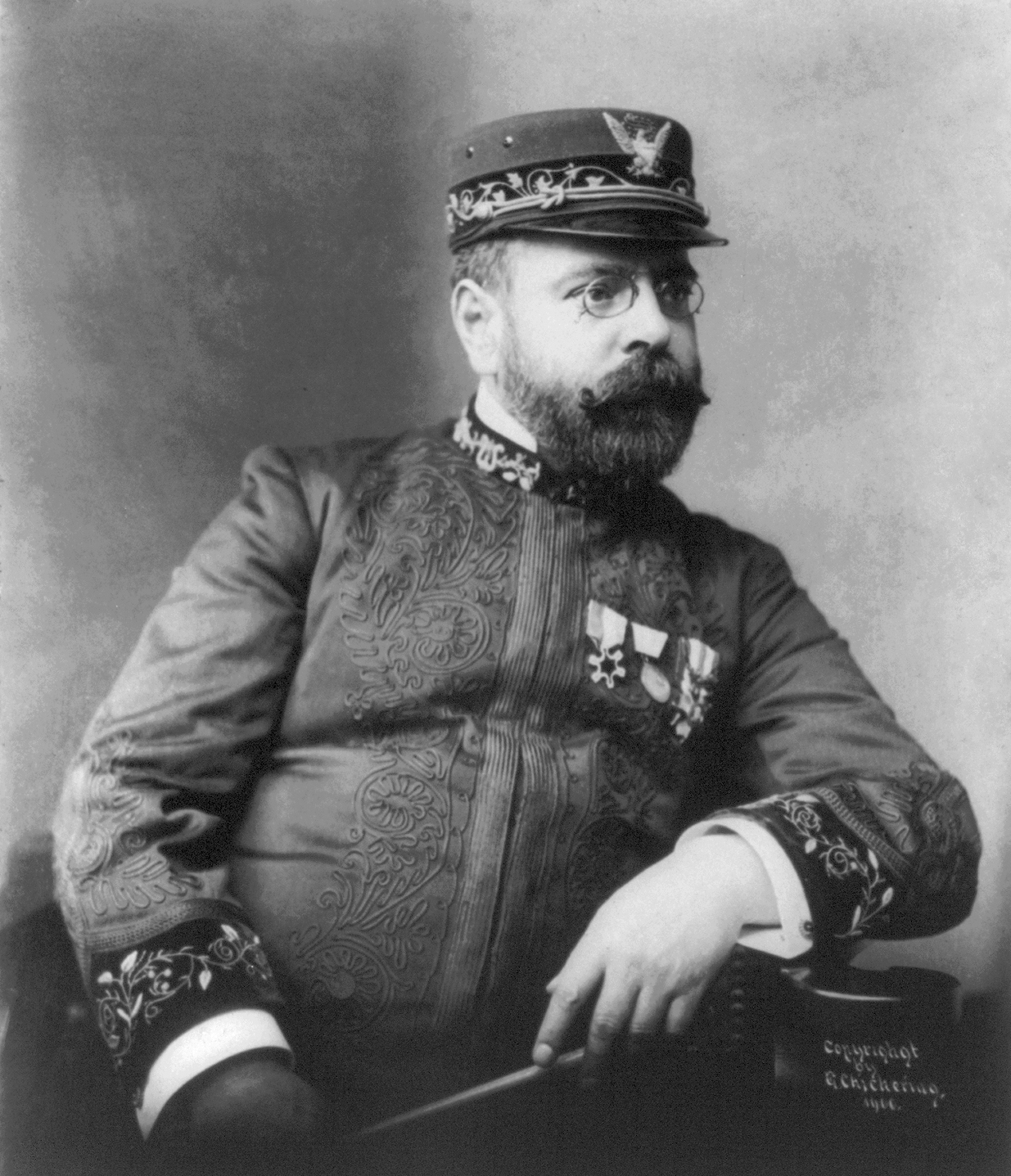
John Philip Sousa (1854–1932) wrote 136 marches across a fifty-five-year career and earned, by acclamation, the title “The March King.” Every American has heard at least three of his works — most have heard five — and the genre of American military and patriotic march music is essentially a Sousa invention. The bandmaster of the United States Marine Band from 1880 to 1892, founder of the world-touring Sousa Band, and patriarch of the Foundation that today administers the Sudler Trophy, Sousa is the single most consequential composer of march music who ever lived.
This guide is a complete chronological walk through Sousa’s career, his most famous marches by era, and the works every American knows whether they realize it or not.
Table of Contents
- Who Was John Philip Sousa?
- Sousa’s Most Famous Marches
- Marches by Era (1873–1928)
- The 5 Marches Every American Knows
- Sousa’s Legacy: The Foundation and the Sudler Trophy
- FAQ
Who Was John Philip Sousa?
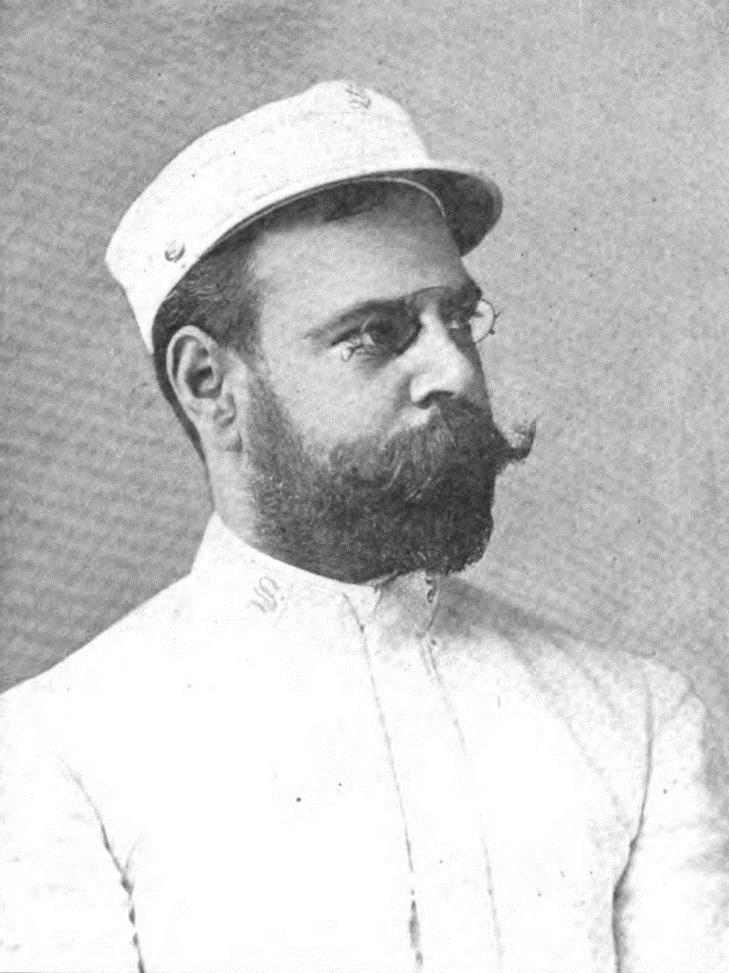
John Philip Sousa was born in Washington, D.C., on November 6, 1854, the third of ten children of Portuguese-Spanish immigrant Antonio Sousa and Bavarian-born Maria Elisabeth Trinkhaus. His father played trombone in the United States Marine Band, and Sousa’s musical apprenticeship began at age six. By thirteen he was already trying to run away to join a circus band; his father responded by enlisting him in the United States Marine Band as a music apprentice.
That enlistment changed American music. Sousa spent seven years as an apprentice in the Marine Band, then six years as a violinist and conductor in theater orchestras, before being appointed Director of the United States Marine Band in 1880 at age twenty-six. Under his twelve-year tenure (1880–1892), Sousa transformed the Marine Band from a passable ceremonial ensemble into the most-respected military musical organization in the world. He served five U.S. Presidents — Hayes, Garfield, Arthur, Cleveland, and Harrison.
In 1892, Sousa left the Marine Band to found his own civilian touring ensemble, the Sousa Band. Over the next forty years, the Sousa Band performed an estimated 15,000 concerts in the United States, Canada, Europe, and on a 1910–11 world tour that included South Africa, Australia, and New Zealand. Sousa kept conducting into his late seventies and died of a heart attack on March 6, 1932, in Reading, Pennsylvania, the morning after rehearsing “The Stars and Stripes Forever” with the Ringgold Band.
Sousa’s Most Famous Marches
Sousa wrote 136 marches in total. Of those, roughly fifteen are still performed regularly today, and five have entered American culture so deeply they no longer feel like the work of any individual composer — they feel like national folklore.
The five universally recognized marches:
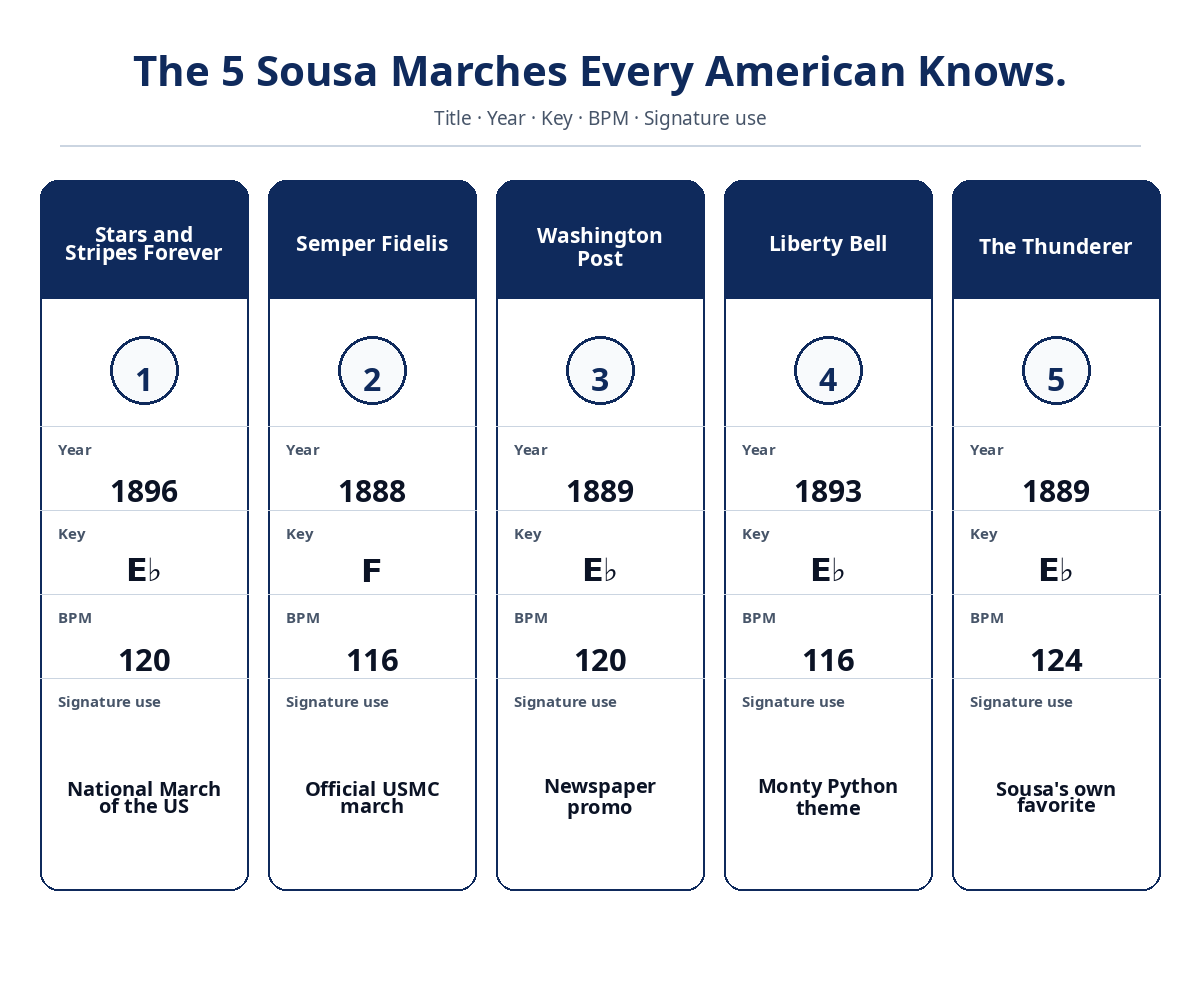
- The Stars and Stripes Forever (1896) — Composed on Christmas Day; the National March of the United States by Act of Congress (1987).
- Semper Fidelis (1888) — The official march of the United States Marine Corps.
- The Washington Post (1889) — Commissioned by the newspaper to promote an essay contest; became Sousa’s first international hit.
- The Liberty Bell (1893) — Recognizable to British TV viewers as the theme to Monty Python’s Flying Circus.
- The Thunderer (1889) — Reportedly Sousa’s personal favorite of his own works.
Other marches in heavy rotation: El Capitan (1896), Hands Across the Sea (1899), The Fairest of the Fair (1908), U.S. Field Artillery (1917), and The Black Horse Troop (1924).
Marches by Era (1873–1928)
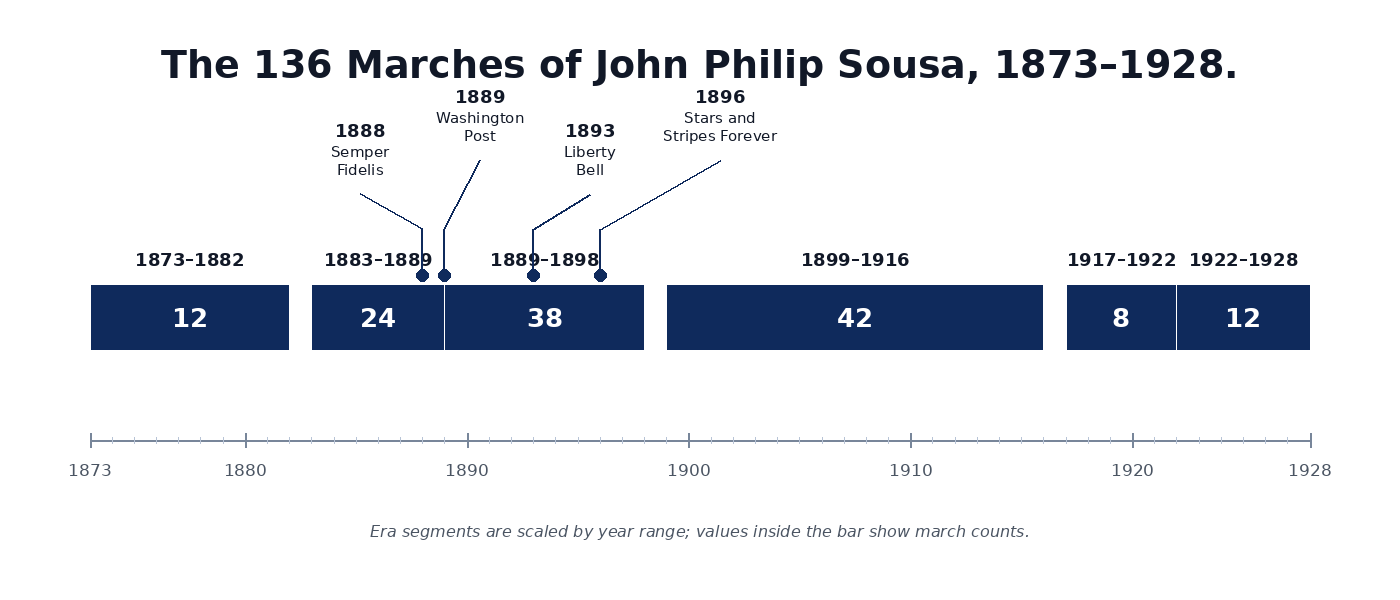
Sousa’s 136 marches span six distinct creative periods, each shaped by his job at the time.
1873–1882: The Apprentice Years (12 marches)
Sousa’s earliest marches were written during his apprenticeship in the Marine Band and his time as a working theater conductor in Philadelphia. These early works show his developing voice but lack the iconic Sousa “trio + grandiose break-strain” structure he would later perfect. Most have fallen out of the repertoire.
1883–1889: Marine Band Director Era (24 marches)
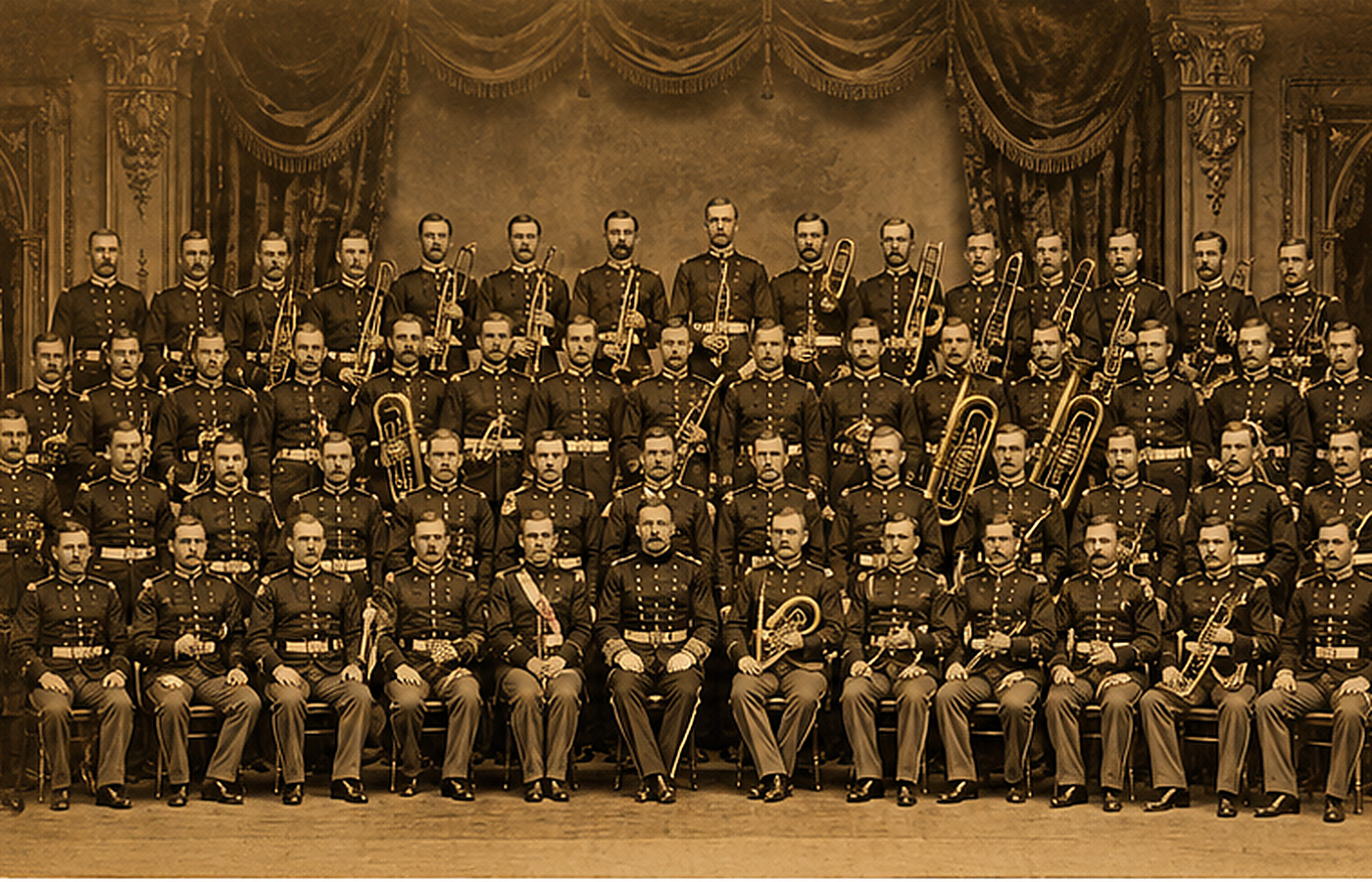
The first great burst of Sousa’s career. As Director of the United States Marine Band he composed Semper Fidelis (1888) — explicitly written as the Marine Corps’ official march — and The Washington Post (1889), which became the most-played march in the world for a brief period in the early 1890s and earned Sousa the title “The March King” from the British press during his 1900 European tour.
1889–1898: Peak Fame (38 marches)
The greatest concentration of Sousa’s enduring works. The Liberty Bell (1893), King Cotton (1895), El Capitan (1896), and the immortal The Stars and Stripes Forever (1896) all date from this period. Sousa was reportedly returning by ocean liner from a vacation in Europe when he composed “Stars and Stripes” — the melody “kept urging itself upon me,” he later wrote, and he committed it to paper as soon as he reached land.
1899–1916: The Sousa Band World Tours (42 marches)
The longest and most-productive era. Free of the Marine Band’s institutional constraints, Sousa toured relentlessly. Hands Across the Sea (1899) and The Fairest of the Fair (1908) are the standouts of this period, both written for specific occasions — the Spanish-American War aftermath and the 1908 Boston Food Fair, respectively.
1917–1922: WWI Navy Reserve (8 marches)
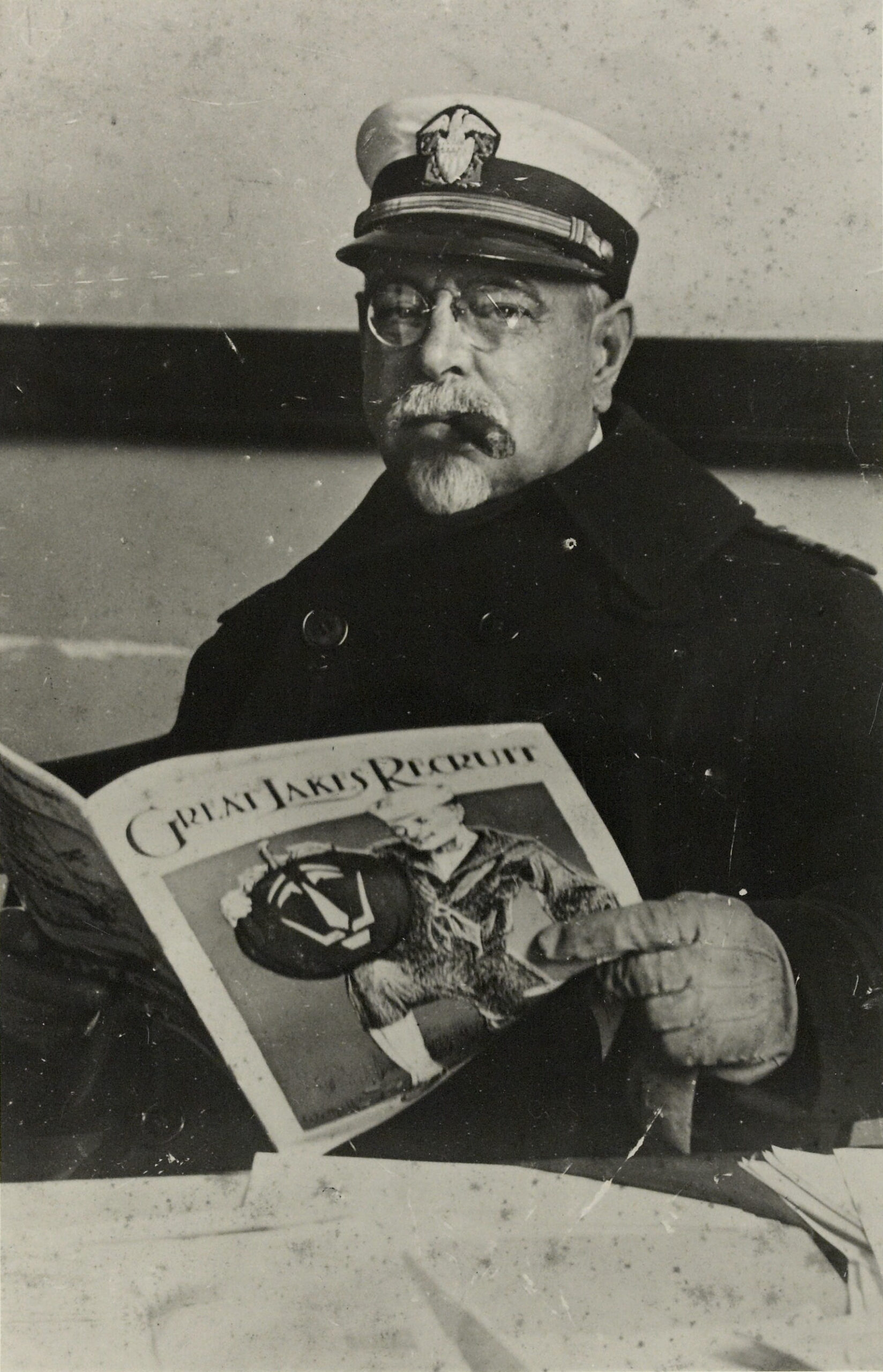
At age sixty-two, Sousa accepted a commission as a Lieutenant Commander in the United States Naval Reserve during World War I and organized military bands at the Great Lakes Naval Training Station outside Chicago. He composed fewer marches during this period — wartime band training consumed his time — but U.S. Field Artillery (1917) became one of his most-frequently performed late works.
1922–1928: Final Works (12 marches)
Sousa’s final period included The Black Horse Troop (1924) and The Pride of the Wolverines (1926), commissioned by the city of Detroit. He continued conducting into his late seventies and was still actively performing the year of his death.
The 5 Marches Every American Knows
| March | Year | Key | Signature Use |
|---|---|---|---|
| The Stars and Stripes Forever | 1896 | E♭ | National March of the United States |
| Semper Fidelis | 1888 | F | Official march of the U.S. Marine Corps |
| The Washington Post | 1889 | E♭ | Originally a newspaper promotional commission |
| The Liberty Bell | 1893 | E♭ | Theme of Monty Python’s Flying Circus (UK) |
| The Thunderer | 1889 | E♭ | Sousa’s reported personal favorite |
A note on “The Stars and Stripes Forever”: after its composition in 1896, the Sousa Band performed it at nearly every concert until Sousa’s death in 1932 — that’s roughly 10,000 live performances by Sousa himself, more than any march in history.
Sousa’s Legacy: The Foundation and the Sudler Trophy
Sousa’s musical legacy is obvious — every Fourth of July, every Marine Corps ceremony, every Boston Pops concert, every American military funeral. His institutional legacy is less visible but just as significant: the John Philip Sousa Foundation, founded in 1980 (reorganized from the earlier Sousa Memorial Committee), now administers the most-prestigious award structure in American band music.
The Foundation gives six Sudler-named awards, all funded by Chicago arts patron Louis Sudler:
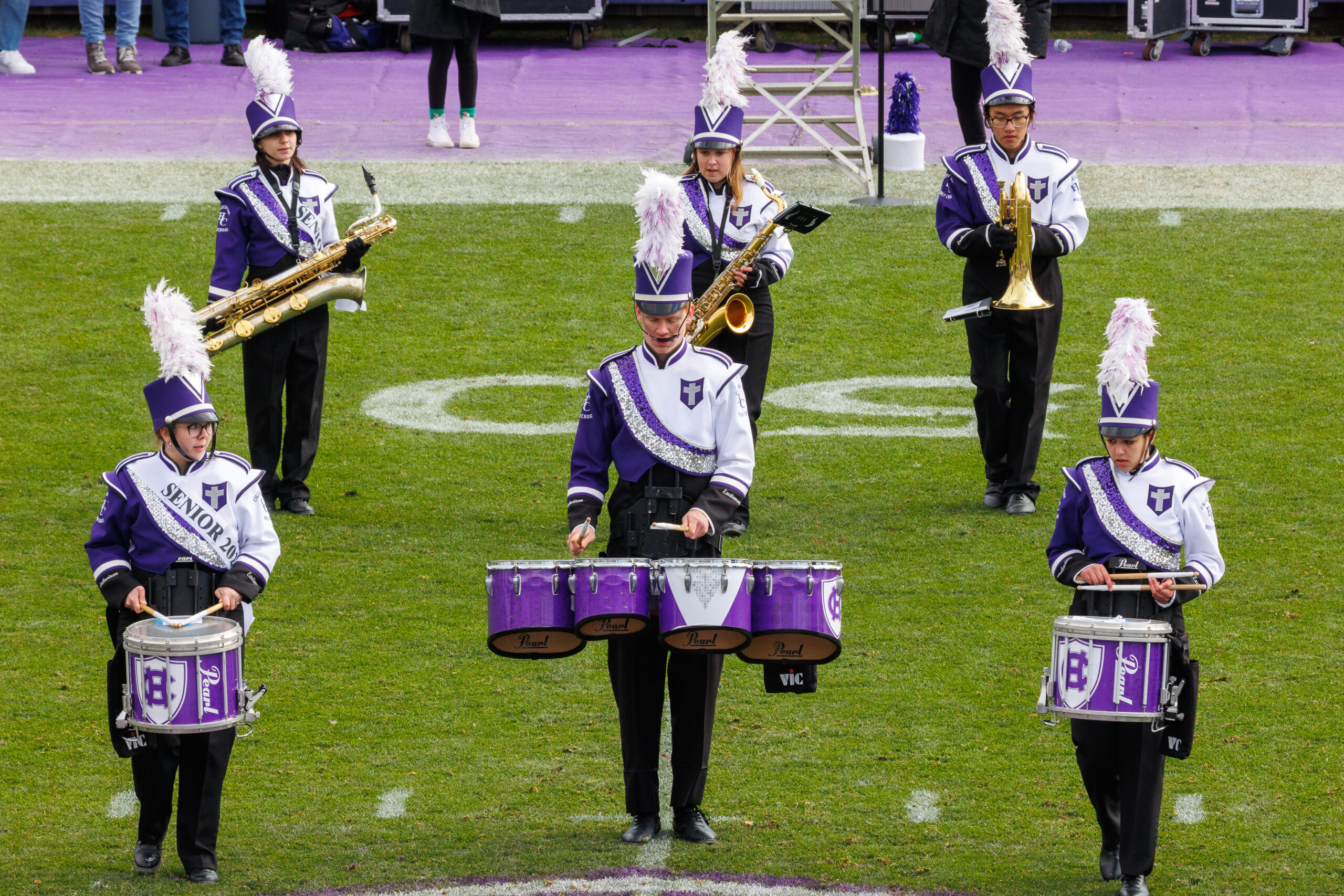
- Sudler Trophy — College marching bands (biannual since 2009)
- Sudler Shield — High school marching bands (international)
- Sudler Flag of Honor — High school concert bands
- Sudler Cup — Middle school concert bands
- Sudler Silver Scroll — Community bands
- Sudler Order of Merit — Individuals
Every Sudler award is, in effect, a Sousa award — a continuation of the recognition Sousa himself argued for during his lifetime: that excellence in American band music deserved formal institutional honor, the same way classical music had concert societies and opera had royal patronage.
When Mississippi State’s Famous Maroon Band lifted the Sudler Trophy in December 2025, it was the 35th college marching band to do so in 44 years. Each of those 35 winning bands has played Sousa marches on the field at every game. The line from “Stars and Stripes Forever” in 1896 to a sousaphone player dotting the “i” of Script Ohio runs directly through John Philip Sousa.
FAQ
What marches did John Philip Sousa write?
Sousa wrote 136 marches across a fifty-five-year career (1873–1928). His most famous are The Stars and Stripes Forever (1896), Semper Fidelis (1888), The Washington Post (1889), The Liberty Bell (1893), and The Thunderer (1889). Other works in regular rotation include El Capitan, Hands Across the Sea, U.S. Field Artillery, and The Black Horse Troop.
What is one of Sousa’s most well-known marches?
The Stars and Stripes Forever, composed Christmas Day 1896. It was designated the National March of the United States by Act of Congress in 1987 and is the most-performed march in American history — Sousa himself led approximately 10,000 live performances of it during his lifetime.
What was John Philip Sousa’s most famous march?
“The Stars and Stripes Forever” is by far Sousa’s most famous work and is universally considered his masterpiece. “Semper Fidelis” is a close second by recognition because every U.S. Marine Corps ceremony in the world uses it as the official march.
What are some famous marching songs?
The most-recognized American marches are nearly all by Sousa: Stars and Stripes Forever, Semper Fidelis, The Washington Post, The Liberty Bell, The Thunderer, and El Capitan. Non-Sousa marches in the same canon include “The Washington Grays” (Claudio Grafulla, 1861) and “The Florentiner March” (Julius Fučík, 1907).
When were John Philip Sousa’s marches composed?
Sousa composed marches continuously from 1873 to 1928 — a fifty-five-year creative span. The greatest concentration of his enduring works dates from 1888 to 1899, the period covering his Marine Band tenure and the founding of the Sousa Band.
Where can I find a list of John Philip Sousa’s marches?
The complete authoritative list is maintained by the United States Marine Band in the recording project “The Complete Marches of John Philip Sousa”, which includes audio recordings, scores, and historical notes for all 136 marches. Wikipedia also maintains a chronological list of marches by John Philip Sousa.
Are there any John Philip Sousa marches adapted for school bands?
Yes — most major Sousa marches are available in arrangements scored for high school and middle school concert and marching bands. The most-performed school-band arrangements are of Stars and Stripes Forever, Semper Fidelis, The Washington Post, and The Thunderer.
What other types of music did John Philip Sousa compose?
Besides marches, Sousa wrote 15 operettas (including the still-performed El Capitan, 1896), 11 suites, 70 songs, dozens of waltzes and fantasies, and one novel (The Fifth String, 1902). But it is the marches that earned him the title March King.
Related Reading
- The Sudler Trophy: Every College Marching Band Winner (1982–2026) — All 35 university marching bands recognized by Sousa’s Foundation with its highest honor.
- Best High School Marching Bands in America (2026): Sudler Flag Winners + BOA Champions — The Sudler Flag of Honor and Sudler Shield recipients, plus the current BOA Grand Nationals leaders.
Mihai Iancu writes about music education, the business of live performance, and the history of American band traditions for Get More Streams.