If college football has the Heisman, college marching bands have the Sudler Trophy. Awarded by the John Philip Sousa Foundation, it’s the single most prestigious honor a university marching band can receive — and no school is allowed to win it twice. Since 1982, only 35 collegiate marching bands have ever been named a Sudler Trophy recipient.
This guide is the complete, year-by-year record of every Sudler Trophy recipient, what each university marching band is best known for, how the Sousa Foundation evaluates each collegiate marching band, and how the Sudler Trophy compares to the Sudler Shield and Sudler Flag of Honor for high school programs.
Table of Contents
- What Is the Sudler Trophy?
- Why It’s Called the “Heisman of College Marching Bands”
- Complete List of Sudler Trophy Winners (1982–2026)
- Which Universities Have Won the Sudler Trophy?
- How the John Philip Sousa Foundation Selects Winners
- Sudler Trophy vs. Sudler Shield vs. Silver Scroll
- FAQ
What Is the Sudler Trophy?
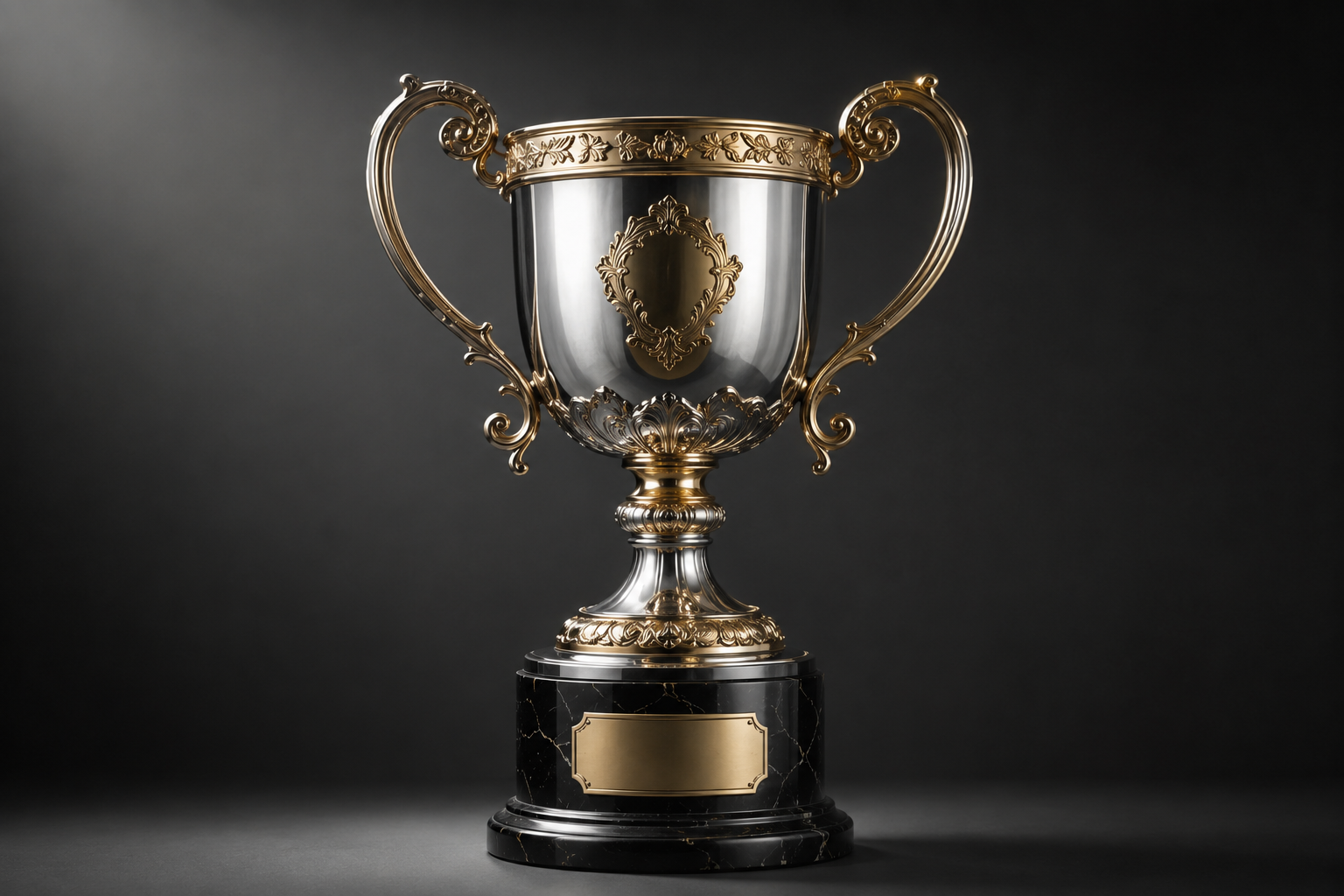
The Sudler Trophy is the highest honor in collegiate marching band. It is awarded by the John Philip Sousa Foundation to a single university marching band that has, in the Foundation’s words, “demonstrated the highest musical standards and innovative marching routines and ideas” and made “important contributions to the advancement of the performance standards of college marching bands.”
The award was created in 1980 when the Sousa Memorial Committee was reorganized into the John Philip Sousa Foundation, with funding and naming support from Louis Sudler, a Chicago real estate developer and lifelong arts patron. The first Sudler Trophy was presented to the University of Michigan Marching Band in 1982, making the Wolverine band the inaugural recipient of the highest collegiate marching band honor in America.
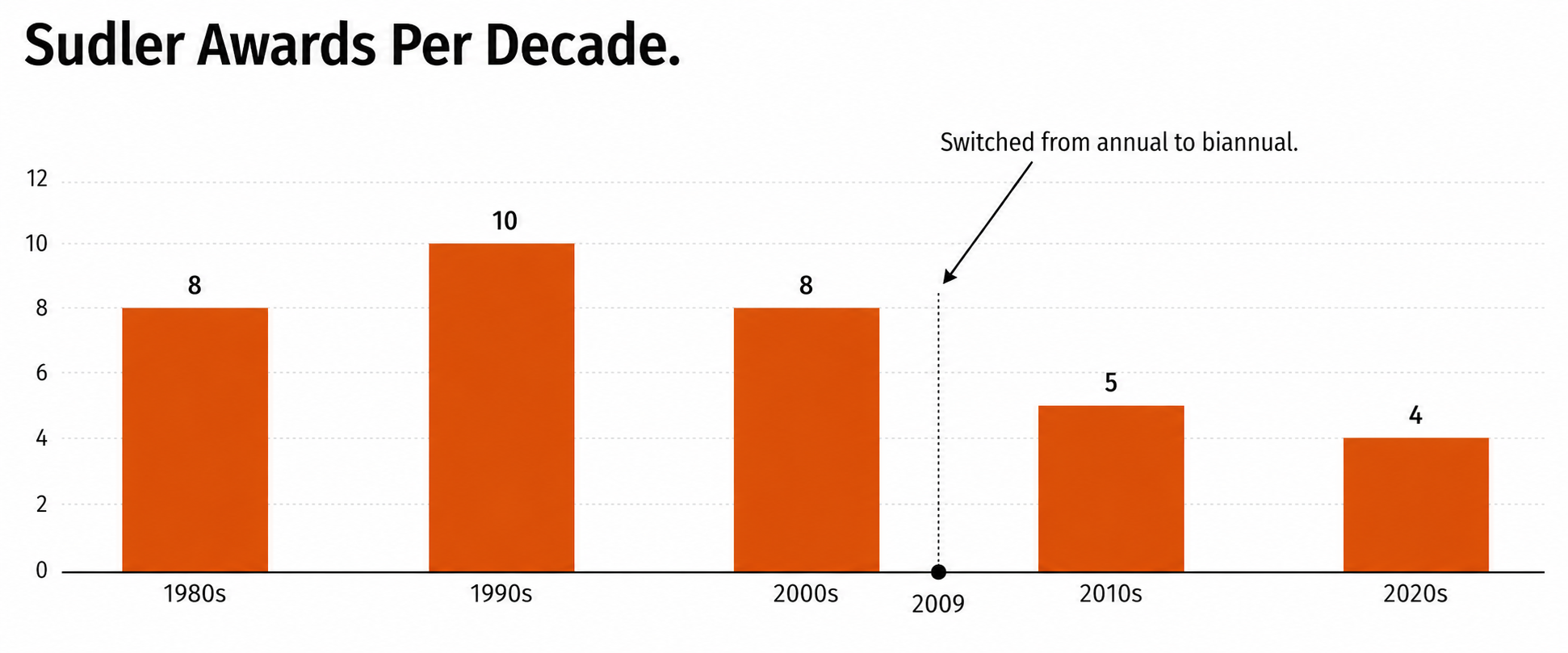
From 1982 to 2007 the Sudler Trophy was given annually. Since 2009 it has been awarded biannually, with a more rigorous nomination, supporting-materials, and voting process administered by the Foundation. The change reflected a deliberate move toward making the award even rarer — every recipient of the Sudler Trophy now joins an exclusive group, and no university marching band is ever eligible to be named a Sudler Trophy recipient twice. The performance standards of college marching bands have evolved tremendously since the first award, and the Foundation has updated its evaluation criteria accordingly.
Why It’s Called the “Heisman of College Marching Bands”

A Los Angeles Times reporter once described the Sudler Trophy as “the Heisman Trophy of the collegiate band world,” and the comparison has stuck. Both awards honor sustained excellence rather than a single performance; both are voted on by a panel of experts rather than decided by competition; and both are limited to one recipient per cycle.
But there is one critical difference: the Heisman is given every year and a player can theoretically win it more than once (only one ever has). The Sudler Trophy is a once-in-a-lifetime award for an institution. When Mississippi State’s Famous Maroon Band became the newest recipient of the Sudler Trophy in 2026, it joined a list of only 35 university marching bands ever to do so in the award’s 44-year history. Every recipient on that list represents a different program that has met the Foundation’s bar for outstanding collegiate marching band excellence.
Complete List of Sudler Trophy Winners (1982–2026)
1. University of Michigan Marching Band (1982)
Best Known For: Being the inaugural Sudler Trophy recipient and the unmistakable “Hail to the Victors” pregame entrance at Michigan Stadium.
The Michigan Marching Band has performed at every home Wolverines football game since 1897, making it one of the oldest continuously operating collegiate bands in the country. When the John Philip Sousa Foundation launched the Sudler Trophy in 1982, Michigan was the obvious first choice — the band was already widely regarded as a benchmark for size, precision, and tradition.
Founded as a 30-piece ROTC ensemble, the band now numbers around 400 members and has been led by some of the most influential directors in collegiate band history. The pregame “M Fanfare” and the entrance tunnel ritual at the Big House remain among the most-imitated traditions in college sports.
2. Marching Illini, University of Illinois (1983)
Best Known For: Inventing the modern halftime show. The Marching Illini are widely credited as the first college marching band to perform a full themed halftime program with synchronized formations — a format every other band in this list has built on.
Founded in 1868, the Marching Illini is also one of the oldest collegiate bands. Director Albert Austin Harding (1905–1948) is considered the father of the modern college marching band, and the program’s claim to “the first college band to perform a full halftime show” is generally accepted by music historians.
3. The Ohio State University Marching Band (1984)
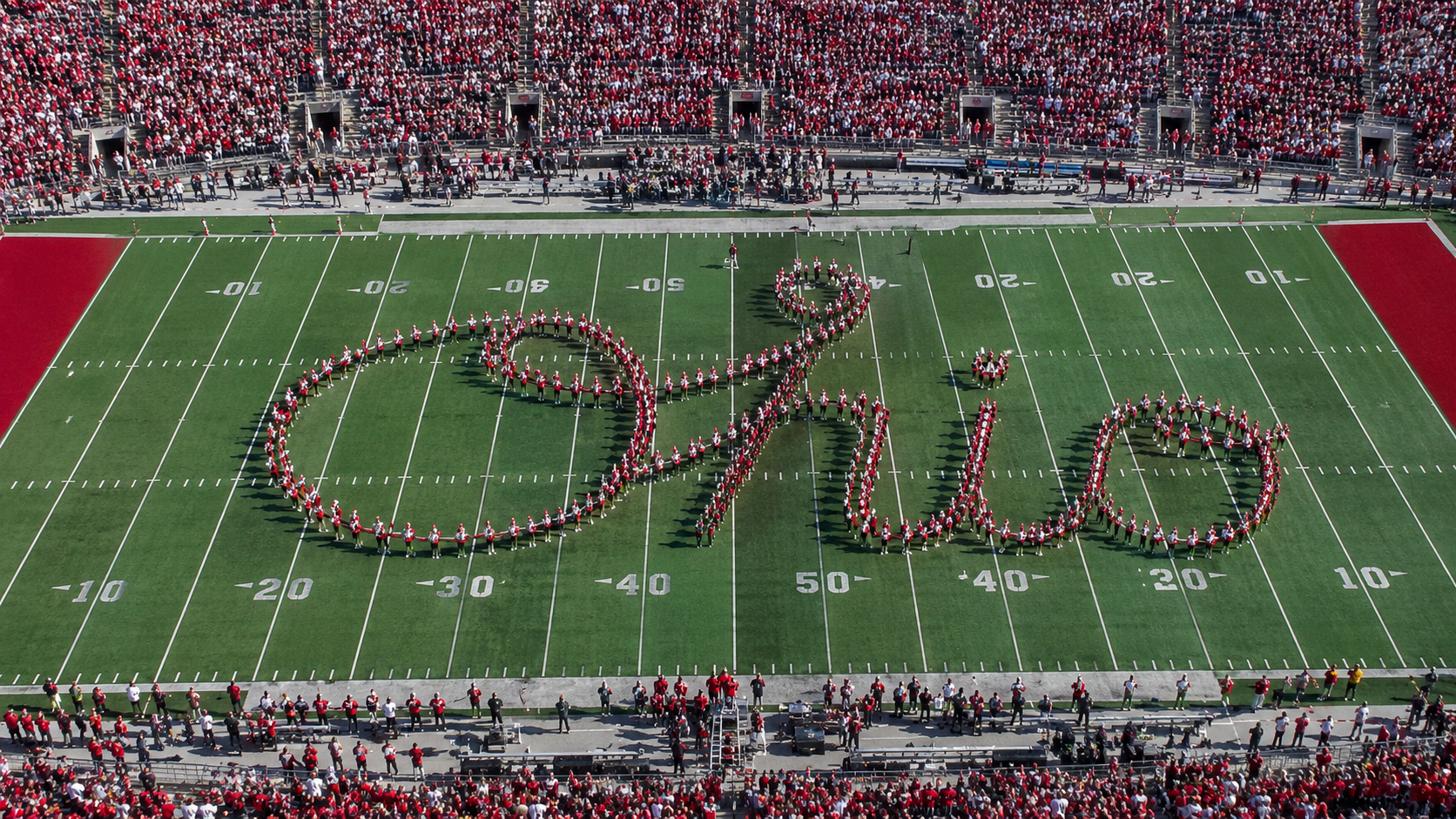
Best Known For: Script Ohio. The iconic dotting-of-the-“i” by a sousaphone player remains the most famous individual moment in any halftime show, period.
“TBDBITL” — The Best Damn Band In The Land — is the only collegiate marching band in America composed entirely of brass and percussion instruments (no woodwinds). The Script Ohio formation, first performed in 1936, has been executed thousands of times and produces a 20-second roar from the 100,000-plus Buckeye fans inside Ohio Stadium every single time.
4. Florida A&M University Marching 100 (1985)
Best Known For: Being the first — and for decades the only — HBCU marching band to win the Sudler Trophy. The Marching 100 essentially defined the modern HBCU show-style halftime aesthetic.
Founded in 1892, the Marching 100 is the cultural standard-bearer for HBCU bands. Their high-step style, choreographed dance routines, and explosive horn lines have been imitated across every HBCU program in the country. The Marching 100 has performed at Super Bowls, presidential inaugurations, and Bastille Day in Paris.
5. The Longhorn Band, University of Texas at Austin (1986)
Best Known For: “The Eyes of Texas” pregame, the largest band uniform in college football, and the burnt-orange wall of sound that fills Darrell K Royal Stadium.
The Longhorn Band — affectionately known as the “Showband of the Southwest” — was founded in 1900 and has grown into one of the largest collegiate marching bands in the country at roughly 400 members. Their pregame ritual entering the field through the north end zone is one of the most-anticipated moments in Texas football.
6. Pride of Oklahoma Marching Band (1987)
Best Known For: The “OU Chant” and “Boomer Sooner” — and being the band that the entire Big 12 Conference has been imitating for forty years.
7. Spartan Marching Band, Michigan State University (1988)
Best Known For: The Spartan Fight Song, the giant “S” formation, and being one of the most consistently excellent Big Ten bands of the last fifty years.
8. Marching Jayhawks, University of Kansas (1989)
Best Known For: “I’m a Jayhawk” and a 100-plus-year tradition of pregame at Memorial Stadium.
9. Hawkeye Marching Band, University of Iowa (1990)
Best Known For: The “Iowa Fight Song” and the iconic block-I formation. Iowa was also one of the first Big Ten bands to integrate full women’s participation in the post-WWII era.
10. Sun Devil Marching Band, Arizona State University (1991)
Best Known For: “Maroon and Gold” pregame and being one of the largest Pac-12 marching ensembles. The Sun Devils made the Sudler list before Arizona itself — a fact ASU fans love to remind their rivals about.
11. Wildcat Marching Band, Northwestern University (1992)
Best Known For: Being the smallest school in the Big Ten and still producing one of the most musically demanding programs in the country. Northwestern’s band is famous for its repertoire, drawing heavily from jazz, contemporary classical, and even film scores.
12. UCLA Bruin Marching Band (1993)
Best Known For: “Sons of Westwood,” the Rose Bowl pregame, and being one of the only Sudler Trophy winners to also serve as the pep band for a non-football program (UCLA basketball) on a regular basis.
13. Marching Royal Dukes, James Madison University (1994)
Best Known For: Being one of the youngest programs ever to win the Sudler Trophy. JMU’s band was only founded in 1972 and was just 22 years old when it took the trophy in 1994. The Royal Dukes are also notable for performing at multiple presidential inaugurations.
14. All-American Marching Band, Purdue University (1995)
Best Known For: The “World’s Largest Drum” (literally — at 10 feet across, it travels by trailer) and the precision drill style that has defined Purdue band traditions for over a century. Purdue claims the first-ever halftime show in 1907.
15. Cornhusker Marching Band, University of Nebraska–Lincoln (1996)
Best Known For: “Hail Varsity,” the unique pregame at Memorial Stadium, and one of the largest band-to-stadium ratios in college football. When 90,000-plus Nebraska fans clap along to “There Is No Place Like Nebraska,” the band cuts through it.
16. Mountaineer Marching Band, West Virginia University (1997)
Best Known For: “Country Roads” — the moment every WVU home game ends, the entire stadium sings John Denver while the Mountaineer Marching Band plays it. Few collegiate band traditions are more emotional.
17. Minuteman Marching Band, University of Massachusetts Amherst (1998)
Best Known For: “Power and Class,” its concert/marching crossover repertoire, and a tradition of recruiting from far outside Massachusetts — the UMMB pulls members from all over New England.
18. Goin’ Band from Raiderland, Texas Tech University (1999)
Best Known For: The Double-T formation, “Fight, Raiders, Fight,” and one of the loudest pregame entrances in the Big 12. Texas Tech’s Sudler win pushed them into the national conversation alongside Texas and A&M.
19. Georgia Redcoat Marching Band, University of Georgia (2000)
Best Known For: “Glory, Glory” between every play in the fourth quarter at Sanford Stadium, and the UGA “Battle Hymn” played before kickoff. The Redcoats are an SEC tradition unto themselves.
20. Fightin’ Texas Aggie Band, Texas A&M University (2001)
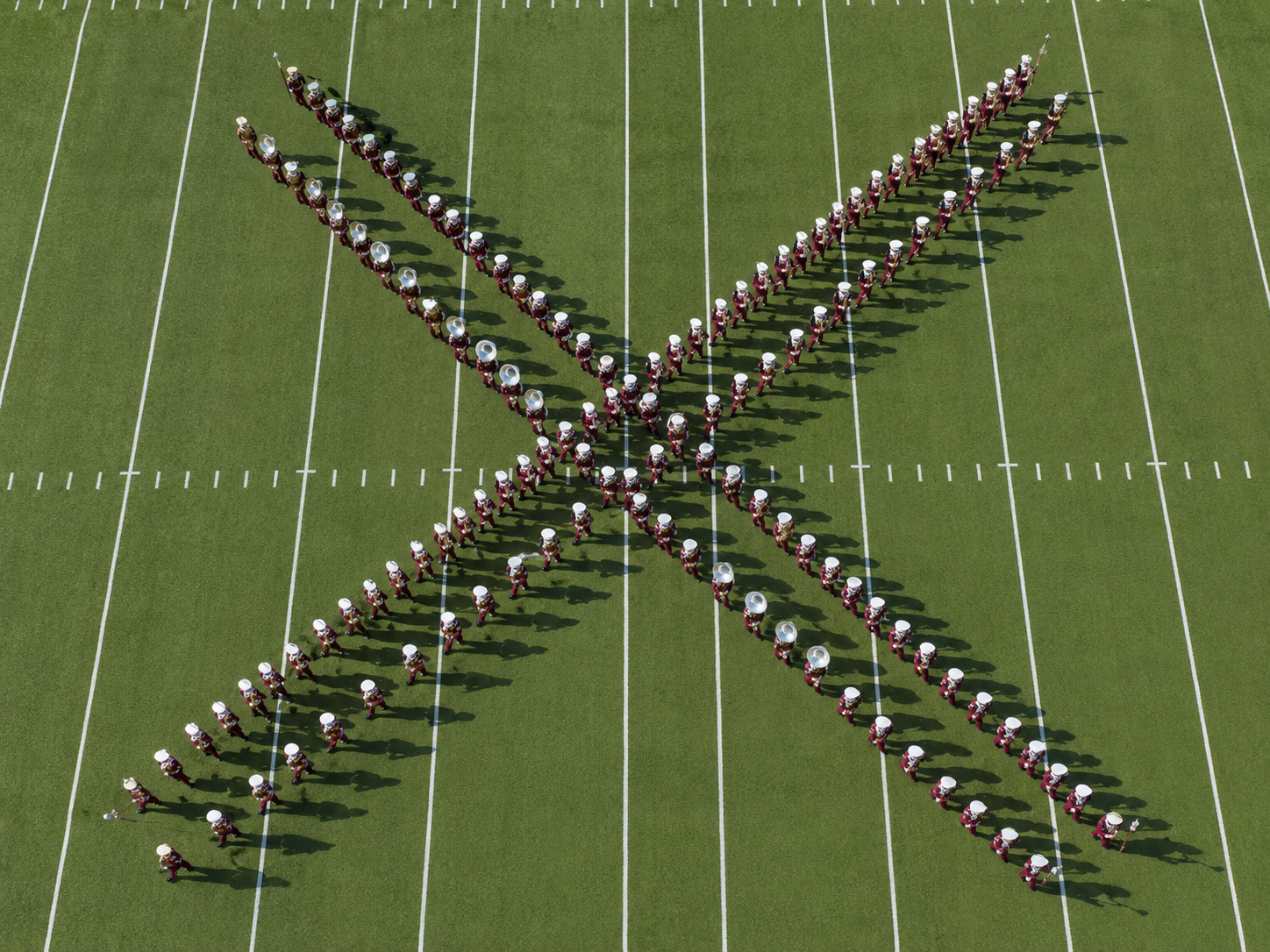
Best Known For: Being the only fully military marching band in the country. Every member is a Cadet in the Texas A&M Corps of Cadets. The Aggie Band’s drill style — featuring intricate “crisscross” formations that no civilian band attempts — is unique in collegiate music.
21. Tiger Marching Band, Louisiana State University (2002)
Best Known For: “Pregame at Death Valley” and one of the most distinctive low-brass sounds in the SEC. LSU’s pregame sequence — including the “Tiger Stadium” salute — is regarded as one of the top three in college football, period.
22. Million Dollar Band, University of Alabama (2003)
Best Known For: “Yea Alabama,” the Crimson Tide pregame ramp entrance, and a championship-grade halftime program that has matched the football team’s national success for decades.
23. Auburn University Marching Band (2004)
Best Known For: “War Eagle” and one of the most-traveled bands in the SEC. Auburn won the Sudler one year after rival Alabama — a coincidence that Iron Bowl fans on both sides still argue about.
24. Penn State Blue Band (2005)
Best Known For: The pregame “Floats Like a Butterfly” sequence, the iconic block-letter formations, and the largest single-color block of fans in college football at Beaver Stadium.
25. Razorback Marching Band, University of Arkansas (2006)
Best Known For: “Calling the Hogs” with the entire stadium — the band leads it, the fans complete it, and the result is one of the most distinctive moments in the SEC.
26. Marching Hundred, Indiana University Bloomington (2007)
Best Known For: “Indiana, Our Indiana” and the last Sudler Trophy ever given on the annual schedule. After 2007, the award became biannual.
27. Pride of the Mountains, Western Carolina University (2009)
Best Known For: Being the first Sudler Trophy winner of the biannual era. Pride of the Mountains’ modern, athletic show style helped redefine what a smaller-school marching band could achieve.
28. Band of the Fighting Irish, University of Notre Dame (2011)
Best Known For: A 165-year continuous performance history (the longest in college football), the “Notre Dame Victory March,” and Bandlink — the band’s program providing music education to economically disadvantaged communities in South Bend.
“It took a long time to get the band considered for the award. Since I had been at the school 13 years now, it was a good outside recognition of the amount of work that went into improving the band.”
— Dr. Ken Dye, Director, Band of the Fighting Irish
29. The Pride of the Sunshine, University of Florida (2013)
Best Known For: “The Orange and Blue” fight song, the “Gator Chomp,” and a halftime style that mixes traditional drill with contemporary popular music.
30. Pride of Wildcat Land, Kansas State University (2015)
Best Known For: The “Wabash Cannonball” — every K-State home game ends with the entire stadium dancing along. The Pride of Wildcat Land is one of the smallest Sudler winners by enrollment but punches far above its weight.
31. Cyclone Football “Varsity” Marching Band, Iowa State University (2017)
Best Known For: “ISU Fights,” the largest student section participation in the Big 12, and the high-energy halftime style that defines Jack Trice Stadium gamedays.
32. “Incomparable” Golden Rams Marching Band, West Chester University of Pennsylvania (2019)
Best Known For: Being one of only two non-Division I FBS programs ever to win the Sudler Trophy. West Chester is a Division II school and a teacher-prep powerhouse — the Golden Rams have produced more high school band directors than nearly any program in the country.
33. The Marching Southerners, Jacksonville State University (2022)
Best Known For: “Salt Creek,” the legendary opener that has been the Marching Southerners’ signature for nearly fifty years. Jacksonville State is the second non-FBS program to win.
34. The Pride of Arizona, University of Arizona (2024)
Best Known For: Being the third Pac-12 band to win and the 34th overall. Director Chad Shoopman accepted the trophy on behalf of “the generations of students and previous directors whose countless accomplishments and achievements made this highest honor possible.” The Pride of Arizona was selected from a record-18 nominated bands that cycle.
35. Famous Maroon Band, Mississippi State University (2026)
Best Known For: The newest Sudler Trophy recipient. Mississippi State’s Famous Maroon Band has been a fixture of SEC football for over a century and received the trophy at the Midwest Clinic in Chicago in December 2025.
Which Universities Have Won the Sudler Trophy?
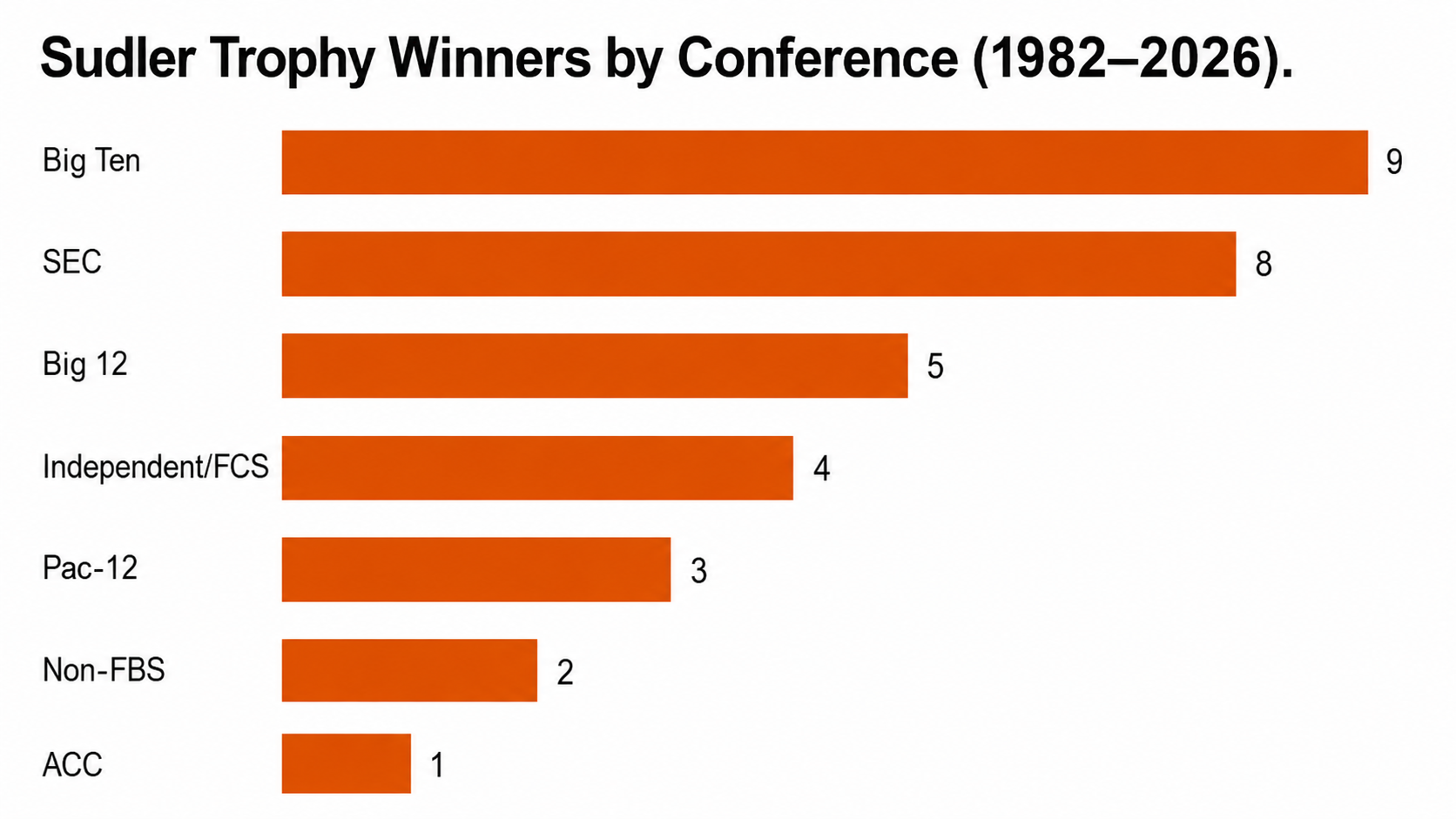
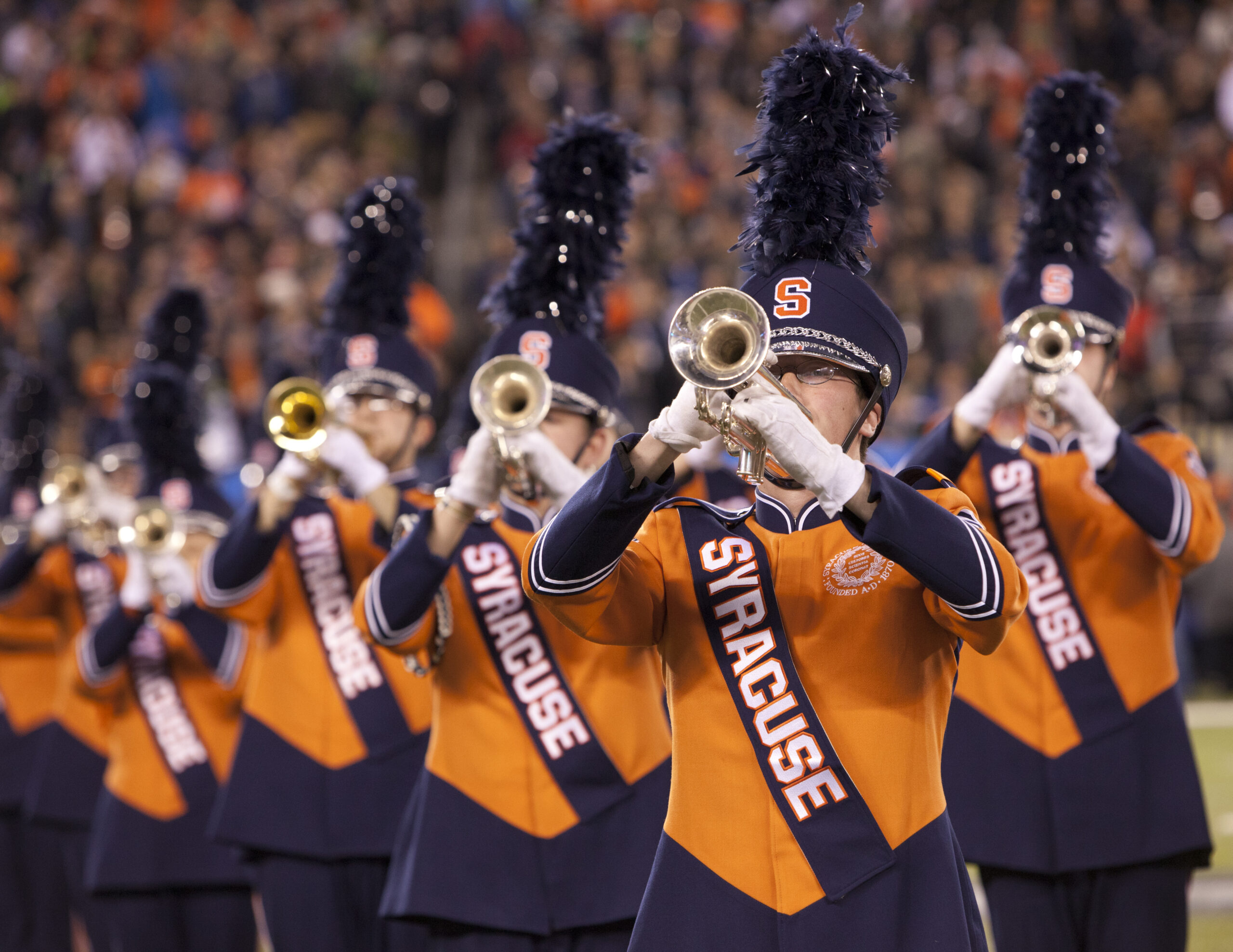
Through 2026, 35 university marching bands have received the Sudler Trophy. Here is a quick reference by conference:
- SEC (8): Florida A&M, Georgia, Texas A&M (then Big 12), LSU, Alabama, Auburn, Arkansas, Florida, Mississippi State, plus former-conference members
- Big Ten (7): Michigan, Illinois, Ohio State, Michigan State, Iowa, Northwestern, Purdue, Penn State, Nebraska (the Cornhuskers won as a Big 12 school before realignment)
- Big 12 (4): Oklahoma, Kansas, Texas Tech, Kansas State, Iowa State
- Pac-12 (3): Arizona State, UCLA, Arizona
- ACC (1): Notre Dame (independent at the time)
- Non-FBS / Division II (2): Western Carolina, West Chester
- Independent / FCS (3): James Madison, Jacksonville State, Texas (Big 12 then SEC), and Massachusetts
How the John Philip Sousa Foundation Selects Winners
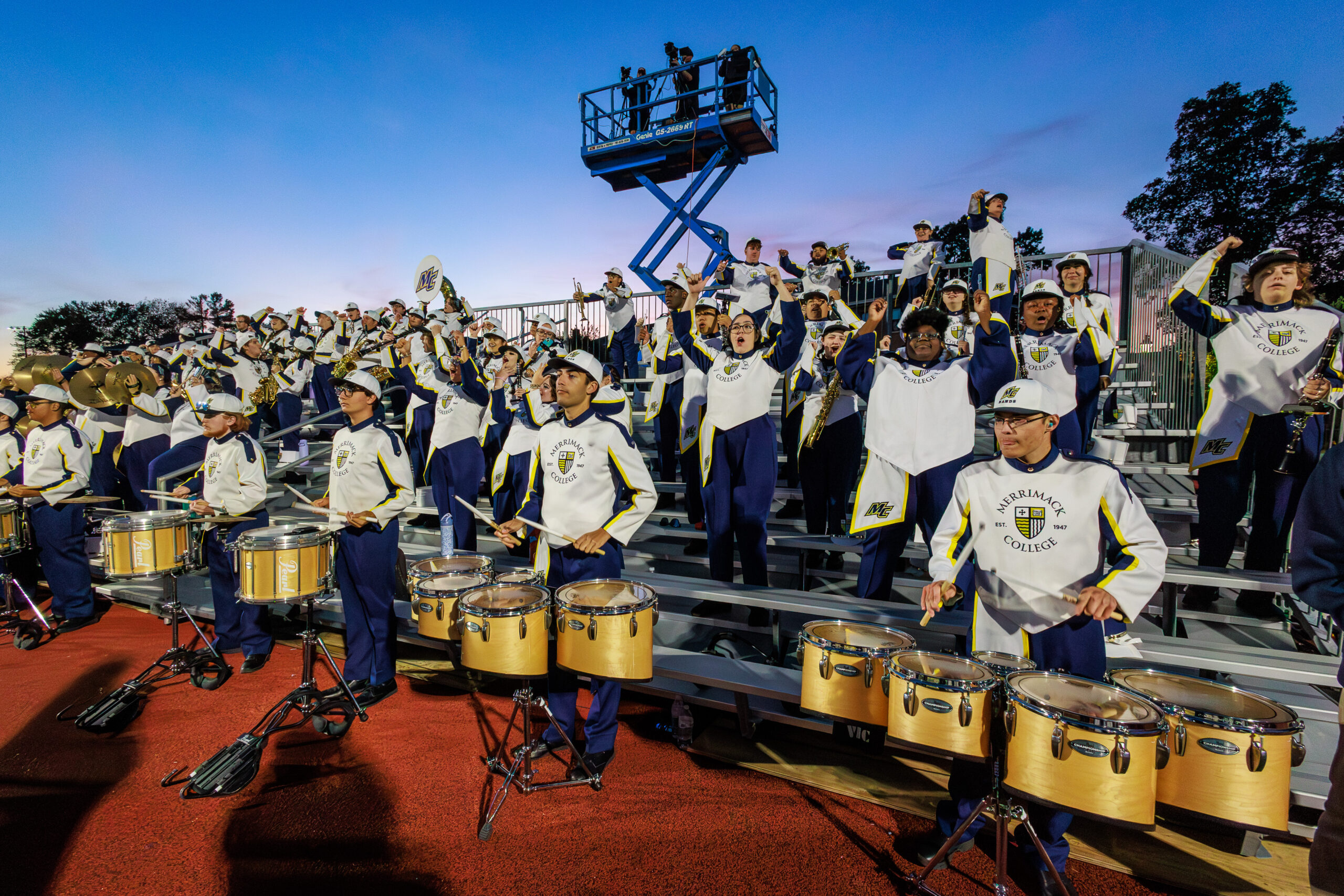
The selection process for the Sudler Trophy is deliberately rigorous. The John Philip Sousa Foundation receives nominations from band directors, music educators, and prior Sudler Trophy recipients. Each nominated university marching band submits a comprehensive supporting-materials package, which typically includes:
- A history of the collegiate marching band’s programming over the prior 10 years
- Audio and video documentation of recent halftime shows
- Letters of support from the music education community
- A summary of community outreach, educational programs, and contributions to advancing the performance standards of college marching bands
The Foundation then convenes a voting committee of national music educators, conductors, and prior Sudler-affiliated personnel. The Sudler Trophy has been given to only one university marching band per cycle since 2009 — and even in the annual era of 1982–2007, no collegiate marching band ever shared the trophy. The decision to name each new recipient of the Sudler Trophy involves outstanding contribution evaluation across a decade of programming.
A nominated band may be considered across multiple cycles. The Pride of Arizona university marching band, for example, was selected from a record-18 nominees in the cycle that produced its 2024 win as the 34th Sudler Trophy recipient — meaning at least 17 other collegiate marching bands were considered Sudler-worthy that year but had to wait. Becoming a recipient of the Sudler Trophy can take years of sustained excellence and outstanding contribution to college marching band performance standards.
Sudler Trophy vs. Sudler Shield vs. Silver Scroll
The John Philip Sousa Foundation gives several distinct awards, all named for Louis Sudler. The most-confused are:
| Award | For | Frequency |
|---|---|---|
| Sudler Trophy | One university marching band | Biannual since 2009 |
| Sudler Shield | Outstanding high school marching band (international) | Annual |
| Sudler Flag of Honor | High school concert band programs with sustained excellence | Annual |
| Sudler Cup | Junior high / middle school concert bands | Annual |
| Sudler Silver Scroll | Outstanding community bands | Annual |
| Sudler Order of Merit | Individual lifetime contributions | As nominated |
If you’re researching high school bands, the Sudler Flag of Honor and Sudler Shield are the two you want — covered in detail in our Best High School Marching Bands guide.
To understand the man behind the Foundation that gives all of these awards, see our profile of John Philip Sousa, the March King.
FAQ
Who is America’s most famous bandmaster?
John Philip Sousa (1854–1932), known as “The March King,” is universally regarded as America’s most famous bandmaster. He served as conductor of the United States Marine Band from 1880 to 1892, then founded the Sousa Band, which toured the world for forty years. The Sudler Trophy is administered by the Foundation that bears his name.
What is John Philip Sousa’s most famous song?
“The Stars and Stripes Forever,” composed on Christmas Day 1896. It is the official national march of the United States and is widely considered Sousa’s masterpiece. Other landmark Sousa marches include “Semper Fidelis” (official march of the United States Marine Corps), “The Washington Post,” “The Liberty Bell,” and “Hands Across the Sea.”
What is the highest high school band award?
The Sudler Flag of Honor is generally considered the highest award a high school concert band program can receive. The Sudler Shield is the highest international award for a high school marching band. Both are administered by the John Philip Sousa Foundation. See our Best High School Marching Bands guide for the full list of recipients.
What awards did John Philip Sousa win?
Sousa himself predated most modern music awards. During his lifetime he was decorated by the U.S. government (including a Naval Reserve commission during WWI), the French government (Order of the Palms of the Academy of France), and the Royal Victorian Order from Great Britain. The Sudler Trophy is named in his honor by the Foundation that bears his name — Sousa did not receive it personally.
What other Sudler awards exist?
Besides the Sudler Trophy for college bands, the Foundation administers the Sudler Shield (high school marching), Sudler Flag of Honor (high school concert), Sudler Cup (middle school concert), Sudler Silver Scroll (community bands), and the Sudler Order of Merit for individuals.
Related Reading
- Best High School Marching Bands in America (2026): Sudler Flag Winners + BOA Champions — The high-school counterpart to this list: Sudler Flag of Honor recipients, Sudler Shield winners, and the current BOA Grand Nationals top 12.
- John Philip Sousa: The March King and His 136 Marches — The composer whose Foundation administers every Sudler-named award, profiled by era and signature work.
Mihai Iancu writes about music education, the business of live performance, and the history of American band traditions for Get More Streams.