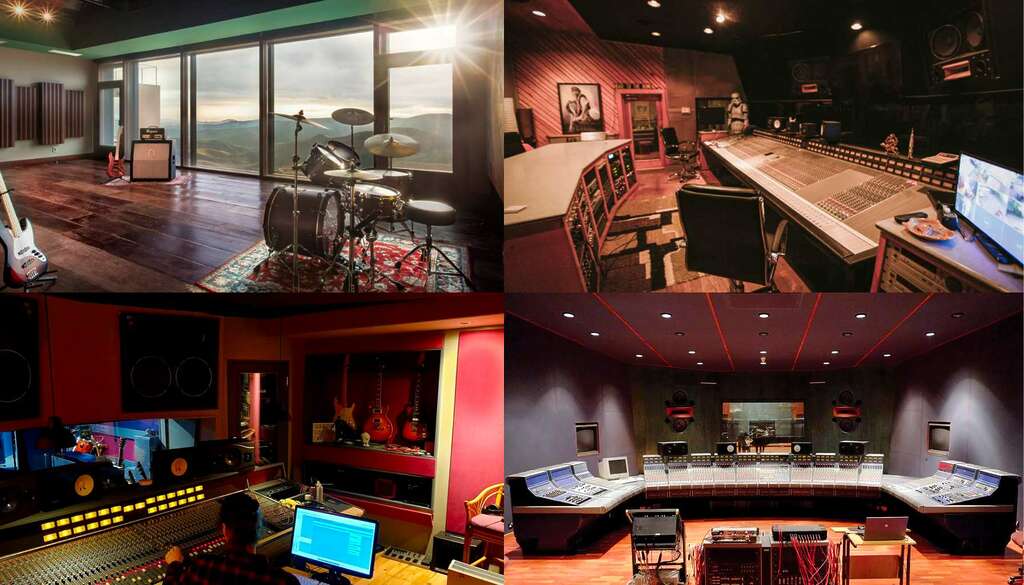
What Are the Best Recording Studios in Atlanta?
Few cities have shaped modern popular music the way Atlanta has. For three decades the metro has been the engine room of hip-hop, trap and R&B, and that influence runs straight through its rooms full of consoles, microphones and engineers. When artists search for recording studios in Atlanta, they are not just looking for a place to track vocals — they are looking for the same Atlanta recording studios where OutKast, T.I., Future, Ludacris and Usher built records that defined eras. The talent is local, the gear is world-class, and the culture is unmistakable.
This guide rounds up the best recording studios the city has to offer, from legacy multi-room facilities on the Westside to producer-owned compounds in Midtown. Whether you need a flagship SSL room for a major-label session or a dependable studio in Atlanta to cut a mixtape, the music studios in Atlanta below cover the full range. Each entry notes the neighborhood, what the room is best known for, and the verified credits that earned it a place on the list.
Table of Contents
- 1. Patchwerk Recording Studios — West Midtown / Home Park
- 2. Stankonia Recording Studios — Blandtown / Berkeley Park
- 3. Means Street Studios — Marietta Street Artery
- 4. Tree Sound Studios — Norcross
- 5. Super Sound Studios — Home Park / Westside
- 6. 5 Star Production Studios — Midtown
- 7. Doppler Studios — Piedmont Circle
- Frequently Asked Questions
1. Patchwerk Recording Studios — West Midtown / Home Park
Best Known For: Being the engine room of Atlanta hip-hop — a 24/7 flagship that has tracked an enormous slice of the city’s gold and platinum catalog.
Founded in 1993 by former Atlanta Falcons offensive tackle Bob Whitfield and now owned and operated by Curtis Daniel III and Mike Wilson, Patchwerk is arguably the most storied commercial studio in the city. The facility moved in 2000 to its current 10,000-square-foot home at 1094 Hemphill Avenue NW in the Home Park area of West Midtown, where it runs multiple isolated rooms — including Studio 995 and Studio 9000 — plus dedicated mastering and production suites.
The credit list reads like an Atlanta hall of fame: OutKast, T.I., Ludacris, Jeezy and Lil Jon have all worked there, alongside out-of-town royalty like Jay-Z, Beyoncé, Usher and Whitney Houston. In July 2025 the studio celebrated its 30th anniversary with a free public festival, underscoring its standing as one of the most important institutions in Southern music.
2. Stankonia Recording Studios — Blandtown / Berkeley Park
Best Known For: Being OutKast’s own studio — the room that gave a landmark album its name and remains an active creative hub.
Located on Antone Street NW near Northside Drive in the Blandtown / Berkeley Park area, Stankonia was purchased by OutKast in 1998 from a facility formerly owned by R&B singer Bobby Brown. The duo’s fourth album, Stankonia, was recorded here, free of the time constraints of renting outside rooms, and the studio became central to the Dungeon Family sound.
The space is still operating today: longtime collaborator Mr. DJ continues to work out of it with other hip-hop talent, and it hosts industry events and sessions. The studio’s profile only grew in late 2025, when OutKast announced a 25th-anniversary reissue of Stankonia and tied-in celebrations around the city — a reminder that this is a working studio with genuine historical weight rather than a museum piece.
3. Means Street Studios — Marietta Street Artery
Best Known For: A modern, full-service complex with one of the city’s coveted Dolby Atmos mixing rooms, founded by DJ Drama.
Sitting at 501 Means Street NW in the Marietta Street Artery on the Westside, Means Street Studios is a 7,500-square-foot facility with three recording rooms, an in-house radio room with terrestrial and satellite capability, a cyclorama room with white and green screens, plus a salon and a fully furnished lounge. It is built for artists who want recording, content and media production under one roof.
The studio added a state-of-the-art Dolby Atmos mixing room with 3D surround technology, making it one of only a handful of Atlanta rooms equipped for immersive mixing. Its credit roster reflects the current generation of hitmakers, with artists including Cardi B, Young Thug and Jack Harlow having recorded there.
4. Tree Sound Studios — Norcross
Best Known For: A sprawling six-room destination studio with a live performance stage and a vintage SSL 4000 G+ console.
Technically just outside the city in Norcross at 4610 Peachtree Industrial Boulevard, Tree Sound has been a pillar of the metro Atlanta scene for decades under owners Paul Diaz and Rafael Capone. The complex runs six recording studios plus a live performance stage and event venue, and operates around the clock. Studio A was designed by acclaimed acousticians George Augspurger and Paul Diaz in 1995, while Studio 11 houses a pristine vintage SSL 4000 G+ desk.
Tree Sound and the surrounding Norcross corridor have hosted an exceptionally broad range of artists over the years — names associated with the area’s studios include Whitney Houston, Pharrell Williams, OutKast, Drake, Justin Bieber and R.E.M. Its scale and full-service offering — recording, mixing, mastering, rehearsal, location filming and listening-party hosting — make it a true destination room rather than a single-purpose booth.
5. Super Sound Studios — Home Park / Westside
Best Known For: The Russ Berger-designed major-label facility, formerly Silent Sound, now owned by Grammy-winning rapper T.I.
At 588 Trabert Avenue NW in the Home Park / Westside area, this 6,000-square-foot room first opened in 1996 as Silent Sound Studios, built out by producer-songwriter Daryl Simmons with legendary acoustician Russ Berger. It was designed from the start to serve major-label clientele, and over the years hosted Beyoncé, Usher, Pharrell Williams, Whitney Houston, Justin Bieber and Elton John.
In February 2020 T.I. purchased the facility and rechristened it Super Sound Studios. It now runs multiple recording rooms, mixing and mastering suites, an upstairs suite where T.I. primarily records, and a large lounge — and operates on an appointment-only basis with high security to protect its high-profile clients. It remains one of the most pedigreed acoustic environments in the city.
6. 5 Star Production Studios — Midtown
Best Known For: Future’s renovated four-room compound, built inside the former DARP facility and outfitted wall-to-wall with SSL consoles.
Originally the home of producer Dallas Austin’s DARP Studios — which opened in 1993 — this Midtown building was taken over and fully renovated by rapper Future and his team. Reborn as 5 Star Production Studios, it now runs four rooms, all outfitted with Solid State Logic consoles, Pro Tools rigs and Augspurger main monitors, anchored by an SSL AWS 948 δelta SuperAnalogue desk.
Future’s engineer Eric Manco has described the gut renovation, “top to bottom,” that turned the space into a club-like compound with business rooms, a lobby, entertainment and pool-table rooms, and a personal suite where Future records when he is in town. It is purpose-built for the high-volume, multi-room workflow that defines the modern Atlanta rap session, with several artists tracking simultaneously across the building.
7. Doppler Studios — Piedmont Circle
Best Known For: One of Atlanta’s oldest continuously operating studios, woven through the city’s hip-hop and rock history.
Founded in 1969 as a one-room jingle house by Pete Caldwell and Tom Wells, Doppler grew into a multi-room facility at 1922 Piedmont Circle NE and became a genuine landmark of Atlanta recording. Its history spans genres and generations: TLC’s “Waterfalls,” OutKast’s ATLiens and Kanye West’s “Can’t Tell Me Nothing” were all recorded in part at Doppler.
As of 2026 the facility operates under new ownership and offers recording, mixing and mastering services alongside studio and office space for lease. For artists who want a room with deep Atlanta lineage and a track record across hip-hop, R&B and rock, Doppler remains a meaningful option on the city’s east side.
Frequently Asked Questions
How much does it cost to record at a studio in Atlanta?
Rates at Atlanta recording studios vary widely by room size, gear, engineer experience and time of day, and most top facilities quote privately rather than publishing fixed hourly prices. Expect a flagship room with a name engineer to cost considerably more than a smaller project studio, and always confirm rates, deposits and what is included (engineering, mixing, tracking time) directly with the studio before booking.
Which is the best recording studio in Atlanta for beginners?
Newer and independent artists are often best served by the more accessible, project-focused rooms rather than the flagship major-label facilities, which are typically appointment-only and priced for established acts. Many of the larger complexes above also run smaller production or vocal-tracking rooms, so it is worth asking each studio which of its spaces fits a first session and a tighter budget.
Which Atlanta studio is best for hip-hop and which for rock?
Atlanta is a hip-hop and R&B capital, and rooms like Patchwerk, Stankonia, Means Street, Super Sound and Future’s 5 Star Production are deeply embedded in that world. For rock and broader live-band work, the larger multi-room destinations such as Tree Sound — with its live stage — and the historically genre-spanning Doppler tend to be the more natural fits.
Do you need to be signed to book a recording studio in Atlanta?
No. The vast majority of music studios in Atlanta book independent and unsigned artists, and much of the city’s catalog was built by acts before any label deal. Some flagship rooms operate by appointment or referral to protect high-profile clients, but plenty of professional studios welcome independent bookings — just reach out directly to check availability and policies.
What is the most famous recording studio in Atlanta?
Stankonia is the most culturally iconic — it is OutKast’s own studio and shares its name with a landmark album — while Patchwerk is the most prolific commercial facility, having celebrated 30 years in 2025 with credits across an enormous swath of Atlanta hip-hop. Both are reasonable answers depending on whether you weight cultural legacy or sheer volume of hits.
Written by Mihai Iancu for Get More Streams. Studio details reflect publicly available information as of 2026; availability, services, and ownership can change, so confirm directly with each studio before booking.