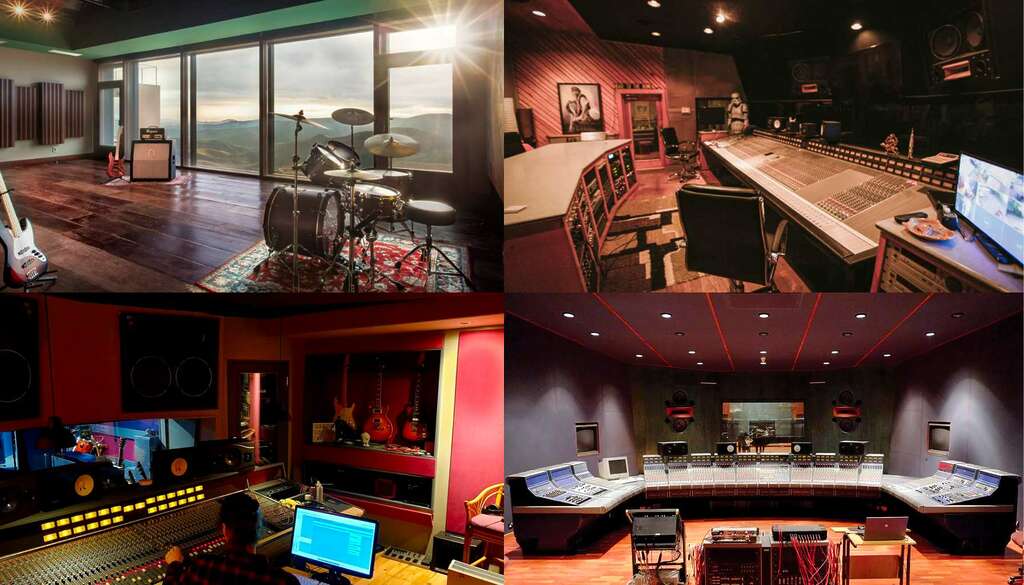
What Are the Best Recording Studios in Seattle?
Few cities carry as much weight in a control room as this one. The recording studios in Seattle are where grunge was committed to tape, where Pearl Jam, Soundgarden, and Nirvana turned a regional scene into a global one, and where today’s indie, hip-hop, and metal acts still track to the same vintage Neve and Trident consoles. When people search for Seattle recording studios, they’re usually weighing two things at once: legacy and practicality — a room with real history that can also deliver a finished, modern record.
This guide rounds up the best recording studios in and around Seattle that are confirmed open in 2026, from Shoreline landmarks to Fremont and Ballard workhorses. Whether you want a full-band live room, a mixing-and-mastering specialist, or simply a credible music studio in Seattle to cut your first single, every studio in Seattle below is currently operating and has the verified credits to back up its reputation.
Table of Contents
- 1. London Bridge Studio — Shoreline
- 2. Robert Lang Studios — Shoreline
- 3. Studio X — Capitol Hill
- 4. Studio Litho — Fremont
- 5. Avast! Recording Co. — Greenwood
- 6. Soundhouse Recording — Ballard
- 7. Hall of Justice — Fremont
- Frequently Asked Questions
1. London Bridge Studio — Shoreline
Best Known For: The birthplace of the Seattle sound — Pearl Jam’s Ten, Alice in Chains’ Facelift, and Soundgarden’s Louder Than Love were all cut here.
Open in Shoreline since 1985, London Bridge Studio is arguably the most consequential room in Pacific Northwest rock. Its credit list runs through Pearl Jam, Soundgarden, Mother Love Bone, Temple of the Dog, Alice in Chains, Screaming Trees, and Blind Melon — and more recently, Brandi Carlile and Macklemore. The 5,000-square-foot live room, with its tall ceilings, hardwood floors, and brick walls, was designed by veteran studio architect Geoff Turner.
The studio is currently owned by producers Geoff Ott, Jonathan Plum, and Eric Lilavois, and the centerpiece is still the 1973 Neve console that has touched every record ever made there. Beyond sessions, London Bridge runs a guided historic tour for fans who want to stand in the room where grunge broke — but it remains a fully working professional studio first.
2. Robert Lang Studios — Shoreline
Best Known For: Nirvana’s final studio recording, “You Know You’re Right,” and the sessions that launched the Foo Fighters.
Carved into a Shoreline hillside, Robert Lang Studios has been operating since the 1970s and is one of the most distinctive rooms in the region — a subterranean, stone-walled complex that took decades to build out. In late January 1994, Nirvana recorded their last known studio track here, and that October Dave Grohl booked the room for six days to track what became the self-titled Foo Fighters debut.
The credit list is deep and varied: Alice in Chains, Soundgarden, Dave Matthews Band, Death Cab for Cutie, Heart, Sir Mix-A-Lot, Peter Frampton, Candlebox, and Bush have all worked here. The acoustics of the natural stone and the multi-room layout make it a destination room for full-band tracking rather than a quick-turnaround project space.
3. Studio X — Capitol Hill
Best Known For: The lineage behind Soundgarden’s Superunknown and the Grammy-winning “Black Hole Sun.”
Studio X carries one of the most storied names in Seattle audio. At its original Belltown location it hosted everyone from Van Morrison to Soundgarden — whose 1994 album Superunknown was completed there — and during the 1990s the same building operated under Ann and Nancy Wilson of Heart as Bad Animals. When the Belltown site was sold for redevelopment, the operation relocated in 2018.
Today Studio X lives in a converted 1920s church hall in Capitol Hill, where it functions as a versatile facility for music sessions as well as audio post-production for film, television, and games. With longtime manager Reed Ruddy coordinating operations, the room handles large-format projects — including orchestral and ensemble dates — that smaller rooms can’t accommodate.
4. Studio Litho — Fremont
Best Known For: Stone Gossard’s Fremont studio and a long home base for Dave Matthews Band records.
Founded and still owned by Pearl Jam co-founder Stone Gossard, Studio Litho sits on N 36th Street in Fremont and has become a quiet anchor of the city’s indie and rock community. Dave Matthews tracked his solo album Some Devil here, and Dave Matthews Band returned for Away from the World and parts of Big Whiskey and the GrooGrux King.
Litho is best known for full-band recording and live tracking, with a welcoming, no-attitude atmosphere that balances professional gear against approachable working conditions. It runs a full slate of services from tracking through mixing and mastering, and continues to draw new alternative and indie acts looking to bridge Seattle’s history with current work.
5. Avast! Recording Co. — Greenwood
Best Known For: Analog tracking on records by Modest Mouse, Fleet Foxes, and Death Cab for Cutie.
Avast! has spent more than three decades making records in north Seattle, and its current two-room facility on NW 80th Street has been running since 2005. Studio A is built around a vintage Trident A-Range console — one of only a handful ever assembled — alongside a grand piano and a spacious tracking floor; Studio B is an intact 1970s room paired with a newer control room.
The credits read like a Pacific Northwest indie syllabus. Phil Ek tracked parts of Modest Mouse’s The Lonesome Crowded West here, Fleet Foxes did overdubs and mixing for material including Helplessness Blues, and Death Cab for Cutie mixed Transatlanticism and finished Codes and Keys at Avast! The analog focus makes it a natural fit for bands chasing warmth and a live, room-forward sound.
6. Soundhouse Recording — Ballard
Best Known For: The Ballard home base of grunge-defining producer Jack Endino.
Established in 1992 and designed by acoustician Chips Davis, Soundhouse was, by its own account, the only studio in Seattle built from the ground up for purpose. It sits on 15th Ave NW in Ballard and is managed by Jack Endino — the producer behind seminal records by Nirvana, Soundgarden, Mudhoney, and a vast list of underground acts going back to the Sub Pop era.
The room centers on a vintage 40-input Trident 80B console, a Studer A827 24-track analog deck, and a Pro Tools rig for hybrid sessions. Endino has tracked and mixed heavy and underground records here for clients including High on Fire, Zeke, Windhand, and Year of the Cobra, making it a go-to for bands who want a loud, uncompromising sound captured by one of the genre’s defining engineers.
7. Hall of Justice — Fremont
Best Known For: The Fremont site — formerly Reciprocal Recording — where Nirvana tracked Bleach.
The Fremont building that houses Hall of Justice has nearly 50 years of history: as Reciprocal Recording in the late 1980s it was where Nirvana recorded their debut album Bleach and where Jack Endino cut a foundational stack of early Sub Pop singles. Producer Chris Walla of Death Cab for Cutie later rebuilt the space as Hall of Justice in 2010.
In 2025 Walla sold the studio to a group of local musicians — Mike V. Davis, Sam Rosson, Mikey Ferrario, and James Kasinger — who kept the name and the room running. The new owners pair a hybrid Pro Tools HDX rig with vintage analog machines and have added community recording classes, keeping the historic space accessible to newer and visiting engineers as well as established acts.
Frequently Asked Questions
How much do recording studios in Seattle cost?
Rates vary widely by room, engineer, and the type of session — full-band live tracking in a flagship room costs far more per day than overdubs or a mixing-only booking, and most Seattle studios quote per project rather than posting fixed prices. The honest answer is to send each studio your specifics (number of songs, players, and whether you need an in-house engineer) and ask for a custom estimate; published hourly figures are rare and change often.
Which Seattle recording studio is best for beginners?
Approachable, full-service rooms like Studio Litho and Hall of Justice tend to suit first-timers well — both are used to working bands at varied budgets, and Hall of Justice even runs recording classes. The key for any beginner is booking a room where the in-house engineer is comfortable guiding you through the process rather than assuming you arrive session-ready.
Which studio should I use for hip-hop versus rock?
For loud, live rock and metal, rooms built around big consoles and live tracking — London Bridge, Robert Lang, Avast!, and Soundhouse — are natural fits. For hip-hop, vocal-forward, and large-format or post-production work, Studio X in Capitol Hill is set up for versatility. The best move is to match the room to the work and ask each studio about recent projects in your genre.
Do you need to be signed to book a recording studio in Seattle?
No. Every studio on this list takes independent and unsigned artists; you don’t need a label, a manager, or industry connections to book a session. You simply reach out, share your project, and confirm dates and budget directly with the studio.
What is the most famous recording studio in Seattle?
There’s no single answer, but London Bridge Studio has the strongest claim as the cradle of the Seattle sound, given Pearl Jam’s Ten, Soundgarden’s Louder Than Love, and Alice in Chains’ Facelift all came out of it. The Reciprocal Recording site now operating as Hall of Justice — home to Nirvana’s Bleach — runs a close second for grunge-history significance.
Written by Mihai Iancu for Get More Streams. Studio details reflect publicly available information as of 2026; availability, services, and ownership can change, so confirm directly with each studio before booking.