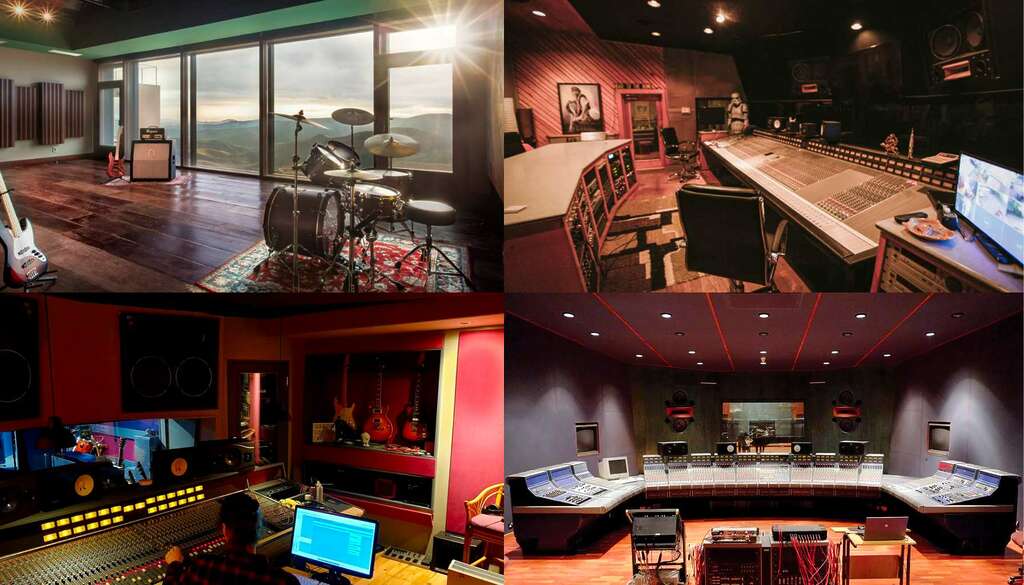
What Are the Best Recording Studios in Austin?
Austin earned the “Live Music Capital of the World” tag on its stages, but the city’s reputation was built just as much behind the glass. The best recording studios in Austin range from Willie Nelson’s decades-old hideaway off South Congress to garage-born rooms that have hosted Arcade Fire and Justin Timberlake. Whether you’re cutting a first single or a full-length, the Austin recording studios below cover analog tape, modern hybrid rigs, and the kind of unpretentious hill-country comfort that keeps artists coming back.
This guide to the best recording studios in town focuses on rooms that are verified open and working in 2026, with real engineers and documented credits. From hip-hop and rock to Americana and experimental, there’s a music studio in Austin here for nearly any project. Use it to shortlist a studio in Austin that fits your genre, your budget, and the sound you’re chasing — then reach out directly to check availability.
Table of Contents
- 1. Arlyn Studios — South Congress (SoCo)
- 2. Public Hi-Fi — East Austin
- 3. Cacophony Recorders — East Austin
- 4. The Bubble — Hyde Park
- 5. Orb Recording Studios — Austin Hill Country
- 6. Estuary Recording — North-Central / Hyde Park
- 7. Same Sky Productions — East Austin
- Frequently Asked Questions
1. Arlyn Studios — South Congress (SoCo)
Best Known For: Being Willie Nelson’s Austin home base and one of the city’s most storied recording institutions, now past its 40th anniversary.
Arlyn Studios opened in 1984 at 200 Academy Drive, just west of South Congress, on land that once held the Austin Opera House. Willie Nelson built it with his nephew Freddy Fletcher, and Freddy and his wife Lisa still run the facility today. The complex houses three recording rooms and doubles as a living piece of Austin music history.
The studio’s documented credits read like a cross-section of American music: Willie Nelson, Ray Charles, Neil Young, Les Paul, and Sublime have all recorded there. It remains a working room — running regular sessions while hosting events — which makes it a fit for artists who want legacy gear and a sense of occasion rather than a bare-bones tracking space.
2. Public Hi-Fi — East Austin
Best Known For: Being the studio of Spoon drummer Jim Eno, built around a Neve console and a long roster of indie heavyweights.
Public Hi-Fi began in 1998 when Jim Eno converted a detached garage into a one-room studio while Spoon worked on Girls Can Tell. After Spoon’s Gimme Fiction was tracked there, the original garage was torn down and rebuilt from the ground up as a purpose-built professional facility — floating floors, multi-wall construction, acoustic doors — and reopened in March 2006.
The room has hosted a wide spread of artists, from Black Joe Lewis and Heartless Bastards to Alejandro Escovedo, Arcade Fire, and Justin Timberlake. With a producer-engineer of Eno’s pedigree behind the desk, it’s a natural pick for indie rock, soul, and roots projects that want a hands-on production partner rather than just a rental.
3. Cacophony Recorders — East Austin
Best Known For: Grammy-winning engineer Erik Wofford’s airy, river-view room favored by psych and post-rock acts.
Cacophony Recorders sits on the banks of the Colorado River in East Austin, run by producer-engineer Erik Wofford. The space is defined by 20-foot ceilings, huge windows over the river valley, and a deliberate lack of a separate control room — a choice Wofford made to keep communication open between producer, engineer, and artist.
Wofford’s credits include the Black Angels, Explosions in the Sky, My Morning Jacket, Bill Callahan, The Octopus Project, and Grupo Fantasma; he won a Grammy for mastering Grupo Fantasma’s El Existential. The combination of natural light, open-plan tracking, and a psych/post-rock track record makes Cacophony a strong fit for bands chasing texture and atmosphere.
4. The Bubble — Hyde Park
Best Known For: Being one of Austin’s longest continually running studios, helmed by Grammy-nominated producer Chris “Frenchie” Smith.
The Bubble was born in 1998 out of the Austin band Sixteen Deluxe and is one of the city’s longest continually running music studios. Its current home — its third — is a cottage behind a 90-year-old historic house in Hyde Park, offering a fully analog and digital recording environment.
Co-owner and producer Chris “Frenchie” Smith has cut records for …And You Will Know Us by the Trail of Dead, Meat Puppets, Slayer, The Toadies, Built to Spill, and Jet, among others. With that loud-and-heavy résumé, The Bubble is an obvious destination for rock, punk, and noise-leaning projects that want a producer who’s lived in those genres.
5. Orb Recording Studios — Austin Hill Country
Best Known For: A purpose-built, large-format facility on an acre of hill country, blending big-room acoustics with a low-pretense Austin vibe.
Orb Recording Studios is a 5,600-square-foot facility built from the ground up on an acre of Texas hill country just outside Austin, established in 2014. It’s the project of co-owners C.B. Hudson and Matt Noveskey, who set out to merge the quality of marquee East- and West-coast studios with Austin’s pretense-free atmosphere.
The facility features two large hardwood floating-floor live rooms with purpose-designed acoustics, giving it the kind of square footage and isolation that full bands and larger productions often need. For projects that want a destination-style residential feel and serious room size, Orb is among the most ambitious builds in the metro.
6. Estuary Recording — North-Central / Hyde Park
Best Known For: A vintage-meets-modern room with deep Austin songwriting roots, operating under the Estuary name since 2010.
Estuary Recording, at 5114 Caswell Ave in north-central Austin, traces back to a studio originally built in 2004 by Austin songwriter Bruce Robison. The idea was to blend modern recording techniques with vintage equipment and a comfortable, lived-in feel; it was renamed Estuary in 2010, having previously operated as Premium Recording.
The studio offers both analog and digital tracking, pairing vintage outboard and instruments with current workflows. That hybrid setup, plus its songwriter-friendly lineage, makes Estuary a comfortable home for Americana, singer-songwriter, and roots material that benefits from warm, character-rich signal paths.
7. Same Sky Productions — East Austin
Best Known For: A converted-church live room on East 2nd Street built for both tracking and events.
Same Sky Productions is an East Austin studio at 2704 E 2nd Street, set inside a roughly 2,700-square-foot converted church. The team has been recording with high-end gear since the turn of the century, and the open, high-ceilinged space lends itself to natural room sound as well as hosting events.
The combination of a sizable single live space and a flexible, creative production approach makes Same Sky a versatile option across genres — from full-band tracking that wants air and ambience to sessions that benefit from an unconventional, non-clinical environment. As with any room, confirm current services and availability directly before booking.
Frequently Asked Questions
How much do recording studios in Austin cost?
Rates vary widely depending on the room, the engineer, the gear, and whether you’re booking hourly, by the day, or as a project. Austin spans everything from intimate owner-operated rooms to large-format destination facilities, so pricing is best confirmed directly with each studio. Many will quote based on your specific project — number of songs, tracking days, and whether you need mixing and mastering — rather than a flat public rate.
Which is the best Austin recording studio for beginners?
Newer artists are often best served by owner-operated music studios in Austin where the engineer is also the producer and can guide the session — rooms like Cacophony Recorders or Public Hi-Fi, where one experienced person shepherds the whole process. The “best” choice depends less on prestige and more on finding an engineer who works in your genre and communicates clearly.
Which Austin studio should I use for hip-hop versus rock?
For rock, punk, and heavier material, The Bubble (Chris “Frenchie” Smith) and Public Hi-Fi have the most directly relevant track records. For full-band tracking with big room sound — useful across rock and live-feel hip-hop — Orb’s large floating-floor rooms and Same Sky’s converted-church space offer the square footage. The smartest move is to match a studio’s documented credits to the sound you want.
Do you need to be signed to book a recording studio in Austin?
No. The vast majority of recording studios in Austin work with independent and unsigned artists, and most of the rooms on this list take direct bookings from anyone with a project and a budget. You don’t need a label, a manager, or industry connections — you just need to reach out and schedule time.
What is the most famous recording studio in Austin?
Arlyn Studios is arguably the most famous, thanks to its Willie Nelson origins and four decades of credits including Ray Charles, Neil Young, and Sublime. Cacophony Recorders and Public Hi-Fi are also widely known within the indie and psych worlds for their Grammy-caliber engineers and high-profile sessions.
Written by Mihai Iancu for Get More Streams. Studio details reflect publicly available information as of 2026; availability, services, and ownership can change, so confirm directly with each studio before booking.