What Are the Best Recording Studios in Detroit?
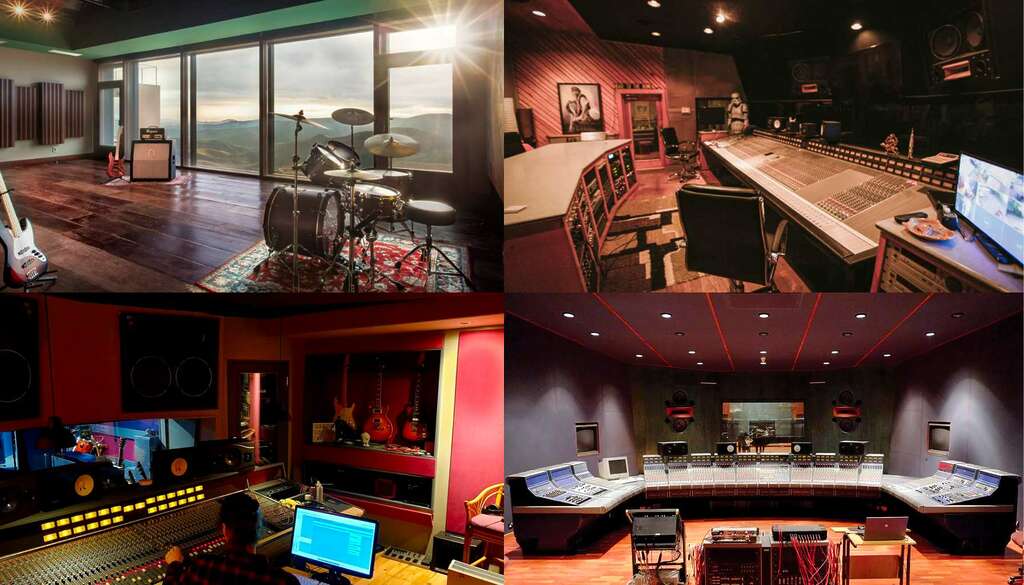
Few cities carry the recording weight Detroit does. This is the town that gave the world Motown and Detroit techno, and that double inheritance still shapes how rooms here are built and run. The best recording studios in Detroit range from analog rock factories in the suburbs to label-and-sync collectives downtown, and the strongest Detroit recording studios tend to blend vintage consoles with modern Pro Tools rigs rather than choosing one over the other.
If you are weighing the best recording studios for your next project — a full-band album, a hip-hop record, voiceover work, or an electronic release — it helps to know which rooms actually operate today and what they are known for. Below we walk through verified, currently operating music studios in Detroit and the surrounding metro, plus a note on the historic landmarks that are now museums. Wherever you are starting from, there is a working studio in Detroit built for it.
Table of Contents
- 1. Rust Belt Studios — Royal Oak
- 2. Pearl Sound Studios — Canton
- 3. Tempermill Studios — Ferndale
- 4. Harmonie Park Studios — Downtown Detroit
- 5. Metro 37 Recording Studio — Rochester Hills
- 6. Assemble Sound — Detroit
- 7. Submerge — Detroit
- Detroit’s Historic Studios (Now Museums)
- Frequently Asked Questions
1. Rust Belt Studios — Royal Oak
Best Known For: Full-band rock and pop tracking under producer/engineer Al Sutton, best known industry-wide as Kid Rock’s long-time engineer and producer.
Sitting in downtown Royal Oak at 118 E 7th St, Rust Belt Studios is a full-service facility covering recording, producing, mixing, mastering, composition, and licensing. The room pairs vintage analog gear with modern digital tools, and offers a large microphone selection plus an extensive in-house instrument and equipment collection that clients can use at no extra charge.
Head producer and engineer Al Sutton has been making records for more than 25 years, with his name most closely tied to his long run as Kid Rock’s producer and engineer. The studio takes on a wide span of genres — from modern pop to metal, country to jazz — and handles everything from full-band tracking to overdubs, which makes it a flexible home base for working acts across Metro Detroit.
2. Pearl Sound Studios — Canton
Best Known For: One of the Midwest’s longest-running pro studios, with a guest list spanning Soundgarden, Eminem, and The Romantics, and one of the largest drum rooms in the country.
Founded in the late 1970s, Pearl Sound Studios in Canton is among the longest continuously operating professional studios in the Midwest. Originally built by producer Ben Grosse, it has been owned and operated since the early 2000s by Chuck Alkazian and Patrick Harwood. The facility is known for a roughly 5,000-square-foot live area billed as one of the largest drum rooms in the country, feeding a 2,000-square-foot control room built around a 96-input Neve V-Series console.
The studio’s documented credits read like a cross-section of rock and Detroit music history — sessions tied to Soundgarden, The Romantics, Eminem, Anita Baker, and Mitch Ryder, with reported visits from Robert Plant and Jimmy Page. That depth of room and console makes Pearl a natural fit for drum-forward rock and large-ensemble recording that needs real acoustic space.
3. Tempermill Studios — Ferndale
Best Known For: An independent-friendly Ferndale mainstay that has tracked, mixed, and released over a thousand indie projects across more than three decades.
Tempermill, at 2040 Hilton Rd in Ferndale, has long pitched itself as a recording home for independent and major artists alike. The spacious facility runs both 2-inch analog tape and Pro Tools, alongside a mix of cutting-edge and vintage equipment, so engineers can move between worlds inside a single session.
Over more than 30 years, the studio reports helping craft well over a thousand indie releases along with major-label work. For unsigned and self-releasing artists who want a serious room without a big-budget gatekeeper, Tempermill is one of the most established independent music studios in Detroit‘s inner-ring suburbs.
4. Harmonie Park Studios — Downtown Detroit
Best Known For: A downtown studio in the historic Paradise Valley entertainment district with Grammy-decorated work and credits across soul, hip-hop, and rock.
Open since 1996 and run by Mark and Brian Pastoria, Harmonie Park Studios sits at 1407 Randolph in downtown Detroit’s historic Harmonie Park entertainment district. The studio’s documented client list is unusually broad — Aretha Franklin, The Four Tops, Eminem, D12, Missy Elliott, The Black Crowes, Mötley Crüe, and Grand Funk Railroad among them.
Co-owner Mark Pastoria won a Grammy for his work on Aretha Franklin’s recording of “A House Is Not a Home,” cut at the studio for the Luther Vandross tribute album So Amazing. Beyond sessions, Harmonie Park’s team has leaned into mentorship and youth music education, framing it as growing a “new Motown” generation of writers and producers downtown.
5. Metro 37 Recording Studio — Rochester Hills
Best Known For: A 4,000-square-foot, two-control-room facility led by an Emmy-winning producer, covering music, voiceover, and commercial audio.
Metro 37 Recording Studio, at 1948 Star-Batt Dr in Rochester Hills, is a full-service recording, mixing, and mastering facility serving artists at every level. The 4,000-square-foot space features two control rooms overlooking a large live room with hardwood floors, two iso booths, and a dedicated mix-and-mastering suite — and it blends modern technique with vintage gear.
The staff is headed by Emmy Award-winning producer, engineer, and keyboardist Kevin Sharpe, and the room handles music alongside voiceover and commercial work. (Note: the business has also operated under the Rock Hill Sound name at the same location and ownership, so you may see both names in listings.)
6. Assemble Sound — Detroit
Best Known For: A Detroit recording, sync-licensing, and artist-development collective famous for its restored 1872 Corktown church, now operating from a current Detroit studio.
Assemble Sound built its reputation inside an 1872 historic church in Corktown — bought in 2015 and outfitted with writing rooms in the bell towers, a Studio A in the old pastor’s office, and a live room under the vaulted ceiling, all in the shadow of Michigan Central Station. It became one of the most distinctive creative spaces in the city before the team sold that church in 2023 to reinvest in the company’s next chapter.
Today Assemble Sound runs as a Detroit-based studio, record label (in a joint venture with Atlantic Records), and a sync-licensing and custom-composition team, with a strong artist-development focus. If your work is song-driven and you care about placement and writing support as much as tracking, it is one of the more strategically positioned recording studios in Detroit. Confirm the current studio address directly when booking, since the original church is no longer their home.
7. Submerge — Detroit
Best Known For: The Underground Resistance / Submerge collective — Detroit techno’s home base, with production studios, the Exhibit 3000 museum, and a record store under one roof.
No survey of Detroit studios is complete without the electronic side of the city’s heritage. Submerge grew out of Underground Resistance, the fiercely independent techno collective formed in 1990, and today functions as a hub that includes recording and production studios, the Exhibit 3000 techno museum, and a record store all in one Detroit building.
The collective keeps investing in the genre’s future through its production studios, mentorship programs, and periodic listening sessions — the latter inspiring the 2025 compilation Submerge Sessions Vol. 1, recorded and compiled in Detroit. For electronic producers who want to work where Detroit techno actually lives, it is a one-of-a-kind studio in Detroit. As a working collective rather than a standard hourly facility, reach out directly about studio access and programming.
Detroit’s Historic Studios (Now Museums)
Best Known For: The two rooms that built Detroit’s sound — Hitsville U.S.A. and United Sound Systems — both preserved as history rather than working studios.
Hitsville U.S.A. — Berry Gordy’s original Motown headquarters and the home of Studio A, where countless Motown hits were cut between 1959 and 1972 — is preserved today as the Motown Museum, with the studio’s original instruments and equipment on view. It is a museum, not a bookable session room; note that guided tours run through January 19, 2026, after which the museum pauses for a major expansion with reopening planned for Spring 2027.
Nearby, United Sound Systems on Second Avenue was Detroit’s first major recording studio and the site of the first recording for Berry Gordy’s Tamla label in 1959, with a session history reaching from John Lee Hooker through Funkadelic. It operated almost continuously from the 1930s until the late 2010s and is a designated local historic district, but it is no longer a working commercial studio. Both are essential to understand the city’s sound — just not places to book your own session.
Frequently Asked Questions
How much do recording studios in Detroit cost?
Rates vary widely by room, engineer, gear, and session length, and most Detroit studios quote per project or per session rather than publishing fixed prices. Larger flagship rooms with classic consoles and big live spaces generally cost more than independent or single-room studios. The reliable move is to contact a couple of studios directly with your project details and ask for a quote.
What is the best Detroit recording studio for beginners?
Independent, full-service rooms that work regularly with self-releasing and unsigned artists — Tempermill in Ferndale and Metro 37 in Rochester Hills are good examples — tend to be the most approachable. They are used to guiding first-time clients through tracking, mixing, and mastering without assuming you arrive with a label or a finished plan.
Which studio is best for hip-hop, and which for rock or electronic?
For hip-hop, downtown rooms like Harmonie Park have deep credits across the genre. For drum-forward rock and full-band tracking, Pearl Sound’s large live room and Rust Belt’s band-focused setup are strong fits. For electronic and techno, Submerge is uniquely tied to Detroit’s scene. Matching the room to your genre matters more than chasing the biggest name.
Do you need to be signed to book a studio in Detroit?
No. Most Detroit recording studios work with independent and unsigned artists every day, and you can book time directly as a self-funded musician. A label is not a requirement — a clear project and a budget are what studios actually need from you.
What is the most famous recording studio in Detroit?
Historically, Hitsville U.S.A. — the Motown Museum’s Studio A — is the most famous, though it is preserved as a museum rather than a working studio. Among currently operating rooms, Pearl Sound and Harmonie Park carry some of the deepest documented credit lists in the metro area.
Written by Mihai Iancu for Get More Streams. Studio details reflect publicly available information as of 2026; availability, services, and ownership can change, so confirm directly with each studio before booking.