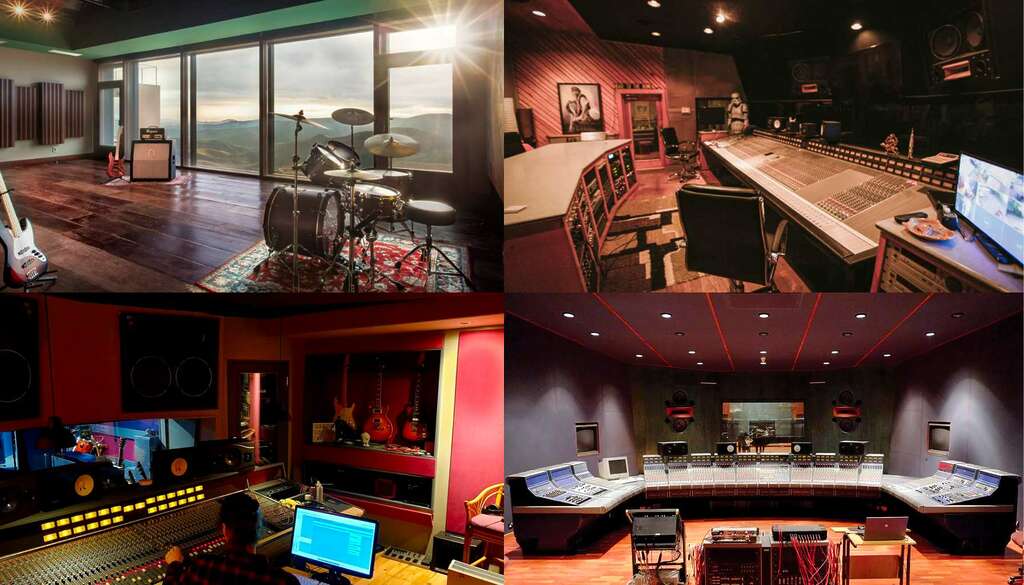
What Are the Best Recording Studios in Nashville?
Few cities pack as much recording history into a handful of zip codes as Music City. The best recording studios in Nashville sit clustered along Music Row, across the converted bungalows of Berry Hill, and out in newer neighborhoods like The Nations — and the rooms themselves range from world-famous tracking floors that have held full string sections to intimate, all-analog spaces built around vintage tape machines. Whether you cut country, rock, hip-hop, Americana, or film and game scores, there is a studio in Nashville shaped for the job.
This guide profiles the most notable Nashville recording studios still operating in 2026, organized by neighborhood so you can match the room to your project and your travel plans. We focused on the best recording studios with verifiable track records and current operations, and we flag where a famous name has become a museum or a university classroom rather than a commercial booking. If you are scouting music studios in Nashville for your next session, start here, then confirm services and availability directly with each facility.
Table of Contents
- 1. Blackbird Studio — Berry Hill
- 2. Sound Emporium — Hillsboro / Belmont
- 3. Ocean Way Nashville — Music Row
- 4. The Tracking Room — Music Row
- 5. Sound Stage Studios — Music Row
- 6. Southern Ground Nashville — Midtown / Music Row
- 7. Welcome to 1979 — The Nations
- 8. Historic RCA Studio B — Music Row
- Frequently Asked Questions
1. Blackbird Studio — Berry Hill
Best Known For: A nine-room complex with one of the deepest microphone and gear lockers anywhere, used across every genre.
Located at 2806 Azalea Place in the Berry Hill neighborhood, Blackbird Studio spreads across nearly a city block and houses nine separate recording studios, plus an in-house audio-engineering school, an audio rental division, and an online learning platform. The facility is famous for its gear: a microphone locker with more than 1,400 rare and vintage choices, along with large collections of amps, guitars, snares, and full drum kits.
Blackbird is deliberately not genre-specific, and its client list reflects that range — Taylor Swift, John Mayer, Dolly Parton, Sheryl Crow, Kings of Leon, Pearl Jam, Neil Young, Snoop Dogg, and many others have recorded there. For artists who want maximum room options and access to historic equipment under one roof, it is one of the most complete studios in the city.
2. Sound Emporium — Hillsboro / Belmont
Best Known For: Roots, Americana, and acoustic recordings with more than 50 years of history.
Sound Emporium sits at 3100 Belmont Boulevard, about a five-minute walk from Music Row in the Hillsboro/Belmont area. Founded by Jack Clement in 1969 and renamed Sound Emporium in 1979–1980, the studio has hosted a remarkable run of recordings, including the Grammy-winning soundtracks T Bone Burnett produced there — O Brother, Where Art Thou?, Cold Mountain, and Walk the Line.
The studio’s credits span Willie Nelson, R.E.M., Robert Plant and Alison Krauss, Kacey Musgraves, Trisha Yearwood, Alan Jackson, and Taylor Swift, among many others. Its rooms are particularly prized for acoustic and ensemble work, making it a frequent destination for Americana and roots artists who want a natural, organic sound.
3. Ocean Way Nashville — Music Row
Best Known For: Large-format orchestral, string, and score recording in a restored Music Row landmark.
Founded in 1996 by Gary Belz and Allen Sides, Ocean Way Nashville sits in the heart of Music Row and is now owned and operated by Belmont University as a commercial facility that doubles as a teaching space for its Mike Curb College of Entertainment and Music Business. Despite the educational tie, it remains a fully working commercial studio.
Ocean Way has become one of the East’s favorite destinations for recording strings and orchestral projects — including video-game and film scores, trailers, and orchestral sweetening. Its credits include Blake Shelton, George Strait, Lionel Richie, Bob Seger, Dierks Bentley, and Dolly Parton, and it is a preferred room for several major video-game audio teams.
4. The Tracking Room — Music Row
Best Known For: One of Nashville’s largest tracking floors, built for big-room, live-ensemble recording.
The Tracking Room, on Music Circle East, was built in the mid-1990s by renowned studio designer Tom Hidley as a roughly 6,500-square-foot facility engineered for exceptional sound. It features multiple isolation booths, including a reverb chamber known as the “Stone Room,” with chamber doors designed to eliminate sound leakage.
The studio’s scale has made it a magnet for large productions: its credited history includes Bon Jovi, The Beach Boys, Chet Atkins, and Kenny Rogers, and it is where Shania Twain’s Come On Over — one of the best-selling country albums of all time — was recorded. For projects that need a genuinely large live room, it is among the most capable spaces in town.
5. Sound Stage Studios — Music Row
Best Known For: A historic hit factory with hundreds of number-one records, still active under Black River.
Sound Stage Studios opened in 1970 at 10 Music Circle South and is among Music Row’s most storied facilities. In 2010, Terry and Kim Pegula purchased the studio to expand resources for their Black River Entertainment label next door, and it continues to run multiple rooms including the well-known full-stage Front Stage.
The studio counts more than 500 number-one hits in its history, from Johnny Cash, George Strait, and Alan Jackson to contemporary sessions with Miranda Lambert, Carrie Underwood, Chris Young, Buddy Guy, and Kelsea Ballerini. It remains a strong choice for country and crossover artists who want a proven, full-service Music Row room.
6. Southern Ground Nashville — Midtown / Music Row
Best Known For: A flexible multi-room facility with staffed engineering and budget-friendly options.
Southern Ground Nashville is a multi-room commercial recording facility near the Music Row/Midtown area, set up to handle a full project from start to finish. Studio A is geared toward tracking, video, and special events; Studio B handles mixing; and Studio C offers overdub and more budget-friendly tracking, giving artists a range of price points within one building.
The facility keeps engineers on staff to assist with sessions, which makes it approachable for artists who want hands-on support rather than a self-run room. That mix of large and small spaces makes it a practical pick for everything from full-band tracking to overdubs and mixing.
7. Welcome to 1979 — The Nations
Best Known For: All-analog recording, tape, and in-house vinyl mastering and cutting.
Established in 2008 and located in Nashville’s The Nations neighborhood, Welcome to 1979 is a fully analog recording studio built around restored tape machines, a vintage console, and classic outboard gear and microphones. While set up primarily for analog work, it can also run digital sessions, and many artists track basics there before finishing elsewhere — or come specifically for an analog mix or master.
The facility is one of the centers of Nashville’s resurgent analog scene, and it has grown to include mastering, vinyl production, and analog-to-digital transfer services. With its in-house “Industries” arm, it can cut and electroplate a record in-house, and it hosts community tape camps and an annual recording summit when not booked for sessions.
8. Historic RCA Studio B — Music Row
Best Known For: The birthplace of the “Nashville Sound” — now a museum and tour, not a commercial booking.
Built in 1957 on Music Row, RCA Studio B became the home of the “Nashville Sound,” and more than 47,000 songs were recorded there by artists including Elvis Presley, Dolly Parton, and Waylon Jennings. It is the single most famous recording room in the city’s history, which is why it belongs on any honest list.
Important caveat for artists: Studio B is no longer a working commercial studio. Since 2012 it has been operated solely by the Country Music Hall of Fame and Museum, which runs daily guided tours — it is the only Nashville studio open for public tours. Visit it for the history, but book your session at one of the active rooms above.
Frequently Asked Questions
How much do recording studios in Nashville cost?
Rates vary widely by room size, gear, engineering staff, and whether you book hourly, by the day, or as a project. Large flagship rooms on Music Row and in Berry Hill command premium pricing, while smaller overdub and budget rooms cost considerably less. Nashville studios rarely post fixed public rates because they depend on your specific session, so request a quote directly and ask what is and isn’t included (engineer, assistants, gear rental, tape).
What is the best studio in Nashville for beginners?
Beginners are usually best served by smaller, staffed rooms where an in-house engineer can guide the session, rather than booking a large self-run flagship floor. Facilities that offer multiple rooms at different price points — such as a budget-friendly tracking or overdub room — let newer artists keep costs down while still working in a professional environment. Always tell the studio your experience level when you inquire.
Which Nashville recording studio is best for hip-hop, rock, or country?
For country and crossover, the historic Music Row rooms with deep hit catalogs are natural fits, while large live tracking floors suit full rock and ensemble bands. Genre-flexible complexes with extensive gear lockers can handle hip-hop, pop, rock, and country equally well, and analog-focused studios appeal to rock and roots artists chasing a vintage sound. Match the room’s strengths and gear to your genre, and ask each studio about recent work in your style.
Do you need to be a signed artist to book a studio in Nashville?
No. Nashville’s commercial studios are available to independent and unsigned artists as well as label clients — booking simply requires availability and payment, not a record deal. Many rooms specifically cater to independent musicians, and smaller or budget rooms make professional recording accessible without a label budget.
What is the most famous recording studio in Nashville?
Historically, RCA Studio B is the most famous, as the birthplace of the “Nashville Sound” and the site of tens of thousands of recordings. Today it operates as a museum and tour rather than a bookable studio, so among currently working rooms, long-running facilities like Blackbird, Sound Emporium, and the Music Row historic studios carry the most renowned reputations.
Written by Mihai Iancu for Get More Streams. Studio details reflect publicly available information as of 2026; availability, services, and ownership can change, so confirm directly with each studio before booking.