What Are the Best Recording Studios in Pittsburgh?
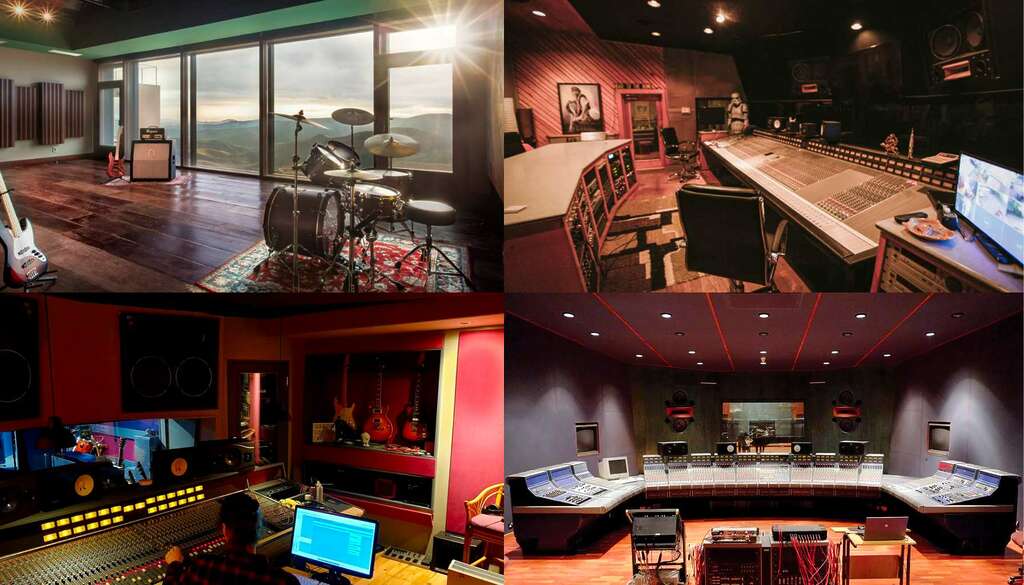
Pittsburgh punches well above its weight as a music town, and the studios scattered across its neighborhoods are a big reason why. The best recording studios in Pittsburgh range from a converted 18th-century church in Millvale to a Lawrenceville room that helped launch two platinum-selling rappers. Whether you are tracking a full band, cutting vocals over a beat, or finishing a record with professional mastering, the Pittsburgh recording studios below cover the full spectrum of work — and every one of them is a real, operating facility.
We built this guide for artists trying to figure out where to actually book time, not for a tourist brochure. Each of these music studios in Pittsburgh earns its spot through a documented track record: real producers, real gear, and real credits. If you are searching for the best recording studios in the region — from hip-hop and rock to voiceover and orchestral mastering — start here, then reach out to the room that fits your project before you book a studio in Pittsburgh.
Table of Contents
- 1. ID Labs — Lawrenceville
- 2. Mr. Smalls Recording — Millvale
- 3. Treelady Studios — Verona / Oakmont
- 4. Red Caiman Studios — Downtown
- 5. The Church Recording Studio — Overbrook
- 6. Tuff Sound Recording — Point Breeze
- 7. Machine Age — Polish Hill
- Frequently Asked Questions
1. ID Labs — Lawrenceville
Best Known For: Being the studio that helped develop Mac Miller and Wiz Khalifa — arguably the most influential hip-hop room in the city.
Founded by producer and engineer Eric “E. Dan” Dan, ID Labs sits on Butler Street in Lawrenceville and has operated as a commercial recording and production facility for two decades. The engineering and production team has long included Jeremy “Big Jerm” Kulousek and Zachary “Sayez” Vaughan alongside E. Dan, whose career spans multiple Gold- and Platinum-certified releases.
The studio’s place in Pittsburgh music history is well documented: ID Labs produced the bulk of Mac Miller’s debut album Blue Slide Park — the first independent album to top the Billboard 200 since 1995 — and a large share of Wiz Khalifa’s commercially released catalog, including multiple tracks on Rolling Papers and O.N.I.F.C. Today the room offers recording, stereo mixing, and Dolby Atmos work, making it a natural fit for serious rap and pop projects.
2. Mr. Smalls Recording — Millvale
Best Known For: A large, great-sounding tracking room inside a historic Millvale church, attached to one of the region’s best-known live venues.
Mr. Smalls is a Pittsburgh institution, and its recording operation has moved into The Sanctuary — a former 18th-century Methodist church across the street from the Mr. Smalls Theatre in Millvale. The studio promotes one of the area’s largest and best-sounding tracking rooms, paired with a team of producers, engineers, and session musicians.
The facility handles a broad range of work: recording, mixing, mastering, production, voiceovers, studio musicians, live recording, format transfers, and commercial ad production. The Sanctuary also houses the Creative.Life.Support Center, where students learn audio recording and video production — so the room doubles as a community music hub. For bands that want a big live space and a deep services menu under one roof, it is one of the most complete recording studios in Pittsburgh.
3. Treelady Studios — Verona / Oakmont
Best Known For: World-class mastering and a Grammy-winning, Billboard-charting track record stretching back to 1999.
Located on Franklin Avenue just east of the city, Treelady Studios has worked on thousands of projects since 1999, with a Grammy win in 2012 and multiple Billboard-charting records to its name. While many know it first as a mastering house, the facility also offers tracking, mixing, and overdubs across multiple rooms.
The technical depth is a key draw. Studio A runs a Pro Tools HD rig alongside a 2-inch 24-track Sony MCI analog tape machine, and the mastering suite is one of the few in the world equipped with the Rupert Neve–designed Legendary Audio Masterpiece system, monitored through Dunlavy speakers. Clients range from solo songwriters to national bands and institutions — which makes Treelady the obvious stop when a record needs a professional final polish.
4. Red Caiman Studios — Downtown
Best Known For: High-end music and film/commercial post-production with a blue-chip client list, right in downtown Pittsburgh.
Operating downtown since 2009, Red Caiman Studios runs three purpose-built rooms across two floors. Studio A spans more than 1,200 square feet with a control room, spacious live room, and two iso booths; Studio B adds a control room and iso booth; and Studio C handles editing and session prep. The facility is SAG-AFTRA approved and built for voiceover, ADR, dubbing, audiobook recording, and audio post for advertising and film, in addition to music production.
Led by engineer, producer, and musician Jesse Naus, Red Caiman lists past clients including the Pittsburgh Symphony Orchestra, Andrea Bocelli, Atlantic Records, Sony Pictures Entertainment, Warner Brothers, Leslie Odom Jr., and Manchester Craftsmen’s Guild Jazz. It is the most production-oriented room on this list and a strong choice for anyone whose project crosses into film, voice, or commercial work.
5. The Church Recording Studio — Overbrook
Best Known For: A cathedral-ceiling live room built inside a former Presbyterian church — natural acoustics you cannot fake.
The Church Recording Studio occupies the former Overbrook Presbyterian Church on Dartmore Street, a building that served its neighborhood from 1936 until 2003 and was converted into a studio precisely because it already had desirable sonic traits. The live tracking room is roughly 1,800 square feet, with wooden floors and a 30-foot cathedral ceiling.
The main control room sits where the altar once stood, separated from the live room by a soundproof wall and large glass windows. The studio offers recording, mixing, and mastering — the latter through a Treelady Mastering suite housed on site — and leans on a deep collection of vintage instruments. For acoustic, choral, and full-band sessions that benefit from a genuinely large, reverberant space, it is one of the most distinctive music studios in Pittsburgh.
6. Tuff Sound Recording — Point Breeze
Best Known For: Hybrid analog/electronic recording and a youth audio-engineering apprenticeship backed by the Mac Miller Fund.
Tuff Sound Recording operates from a roughly 1,200-square-foot studio in a former industrial building, equipped with high-quality analog and digital gear including a large modular synthesizer system. Owner Herman Pearl is a prolific DJ who specializes in hybrid electronic and analog recording, mixing, and sound design, and the studio maintains a close working relationship with Pittsburgh Modular Synthesizers.
Beyond commercial sessions, Tuff Sound is known for the Tuff Sound Apprenticeship Program, which trains local students aged 16–22 in audio production engineering. The program runs in partnership with Lighthouse Studio and has been supported by the Mac Miller Fund. For electronic producers and artists who want a synth-forward room with a real community mission, it stands apart.
7. Machine Age — Polish Hill
Best Known For: A vintage-heavy electronic and indie room run by Pittsburgh techno/house veterans.
Founded in 2004 by Preslav Lefterov and Joe Bartolotta, Machine Age started as a recording studio on the edge of Polish Hill overlooking Bloomfield. Its gear collection skews vintage and is largely unique in the city, including a comprehensive set of hardware synths and outboard effects — among them an EMT 140 plate reverb, a rarity in most electronic studios.
Over time the operation expanded under Lefterov and partner Adam Ratana to include three record labels — Machine Age Records, Pittsburgh Tracks, and Love What You Feel. The studio has tracked numerous well-known local bands and remains an under-the-radar favorite for artists who want analog character and a deep synth arsenal. It is a fitting choice for electronic, experimental, and indie projects.
Frequently Asked Questions
How much do recording studios in Pittsburgh cost?
Rates vary widely depending on the room, the engineer, and whether you are booking hourly, by the day, or for a full project. Most Pittsburgh recording studios set pricing privately and adjust it based on the scope of your session, so the only reliable way to budget is to contact the studio directly with details about your project. Mastering, full-band tracking, and post-production work are typically priced differently from simple vocal sessions.
Which is the best studio in Pittsburgh for beginners?
If you are new to recording, look for a room with a strong teaching culture and an engineer willing to walk you through the process. Studios such as Mr. Smalls Recording, with its Creative.Life.Support Center, and Tuff Sound Recording, with its apprenticeship program, are built around education as well as commercial work — a comfortable starting point for first-timers.
Which Pittsburgh studio is best for hip-hop or rock?
For hip-hop, ID Labs has the deepest documented résumé in the city thanks to its work with Mac Miller and Wiz Khalifa. For rock and full bands that need a large live tracking space, Mr. Smalls Recording and The Church Recording Studio both offer big rooms with natural acoustics. Electronic and experimental artists often gravitate to Machine Age or Tuff Sound for their synth-heavy setups.
Do you need to be signed to book a recording studio in Pittsburgh?
No. Every studio on this list works with independent and unsigned artists, and most of their day-to-day clients are exactly that — solo songwriters, local bands, and self-releasing artists. You simply book time directly with the studio; a label deal is not required to record professionally.
What is the most famous recording studio in Pittsburgh?
ID Labs is the most widely recognized name nationally because of its role in launching Mac Miller and Wiz Khalifa. Mr. Smalls is the most famous as a combined venue-and-studio brand, and Treelady is the best known in mastering circles thanks to its Grammy-winning, Billboard-charting history.
Written by Mihai Iancu for Get More Streams. Studio details reflect publicly available information as of 2026; availability, services, and ownership can change, so confirm directly with each studio before booking.