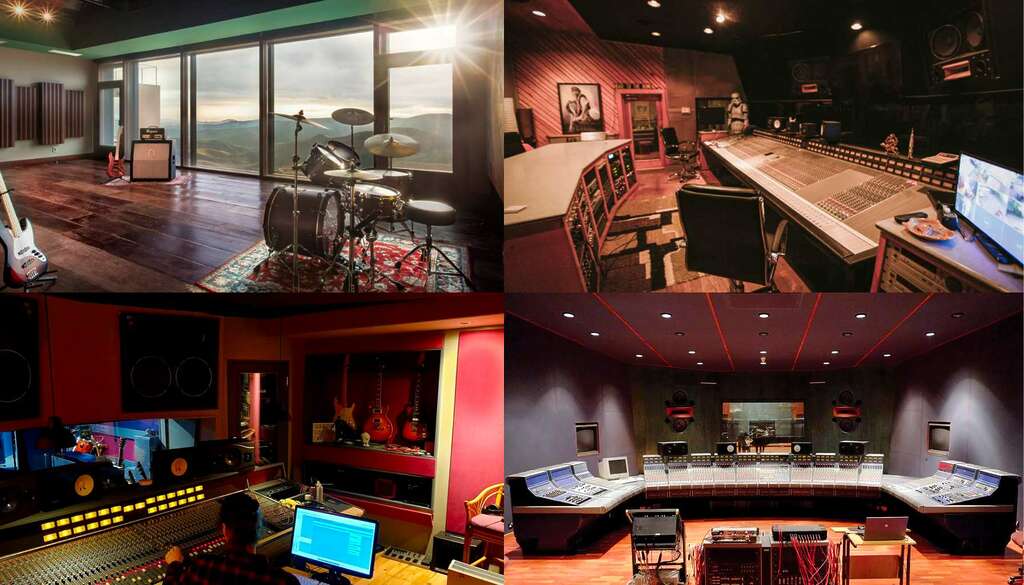
What Are the Best Affordable Recording Studios in Nashville?
Nashville’s reputation is built on Music Row’s marble-floored, million-dollar rooms — but that is not where most independent records actually get made. The city’s working musicians track in renovated shotgun houses, converted Berry Hill bungalows, and member-access project rooms run by the same producers who cut the records you already love. If you have been priced out by the flagship tier and are searching for affordable recording studios in Nashville, the good news is that the Nashville recording studios doing the most interesting indie work are also some of the most accessible.
This guide is the budget-and-indie companion to our roundup of the city’s marquee rooms. Instead of the Blackbird and Ocean Way tier, we focus on the mid-level and project music studios in Nashville that genuinely serve unsigned and self-funded artists — the kind of studio in Nashville where you can book a day, work with a hands-on owner-engineer, and walk out with a release-ready record. Every studio below was verified as currently operating, and we describe credits and gear only where a real source confirms them.
Table of Contents
- 1. The Bomb Shelter — East Nashville
- 2. Battle Tapes Recording — East Nashville
- 3. The Casino — East Nashville
- 4. Trace Horse Studio — Wedgewood-Houston
- 5. The Smoakstack — Berry Hill
- 6. Farmland Studios — Berry Hill
- 7. HOME for Music — East Nashville
- 8. Ivy Hall Studio — Inglewood
- Frequently Asked Questions
1. The Bomb Shelter — East Nashville
Best Known For: Analog, vibe-first indie and roots recording in a renovated East Nashville shotgun house.
The Bomb Shelter is run by producer-engineer Andrija Tokic, and it has become something close to a landmark for left-of-Music-Row recording. The room is an analog wonderland: cedar-planked walls lined with guitars, a vintage MCI console with 16- and 24-track tape machines, a Roland Space Echo, and Pro Tools when a project calls for it. It is a genuine producer’s studio rather than a rent-by-the-hour facility.
Tokic’s credits make the case for the room better than any sales page. He recorded Alabama Shakes’ debut Boys & Girls, Hurray for the Riff Raff’s Small Town Heroes, and blues-rocker Benjamin Booker’s self-titled debut here. For indie and roots artists who want character on tape rather than a clinical pop sheen, this is one of the most respected affordable-tier rooms in the city.
2. Battle Tapes Recording — East Nashville
Best Known For: Shaping the sound of Nashville indie rock from a home-based East Nashville studio.
Producer Jeremy Ferguson started Battle Tapes in 2002 and has run it as his East Nashville home studio since 2003. It is a hybrid analog-and-digital room tucked into the back of a two-story house — exactly the kind of unpretentious, artist-friendly setup that defines the city’s DIY scene. Rolling Stone has profiled it as part of Nashville’s underground music ecosystem.
The credit list reads like a tour of the city’s indie underground: Tristen, PUJOL, Forget Cassettes, Lee Bains III & The Glory Fires, Turbo Fruits, and Lambchop have all recorded with Ferguson. If you make guitar-driven, off-the-beaten-path rock and want a producer who has been at the center of that scene for two decades, Battle Tapes is a natural fit.
3. The Casino — East Nashville
Best Known For: A tailor-made East Nashville production room run by a Grammy-credited engineer.
The Casino is the personal studio of producer-engineer Eric Masse, a Berklee graduate who built the space to suit exactly how he works. It runs roughly 1,200 square feet — a 400-square-foot control room paired with an 800-square-foot live room — and has been upgraded over the years with gear including API outboard. The name, Masse has said, comes from the idea that it is “a good place to take a gamble on your future.”
Masse’s discography spans Americana, country, and indie-pop: he has worked on records with Rayland Baxter, Andrew Combs, The Weeks, Lucie Silvas, and Mikky Ekko, and contributed to Miranda Lambert’s The Weight of These Wings. For singer-songwriters who want a focused, single-producer environment rather than a big anonymous facility, The Casino is a strong mid-tier option.
4. Trace Horse Studio — Wedgewood-Houston
Best Known For: A world-class Neve console at deliberately affordable rates, minutes from downtown.
Trace Horse opened in January 2017 with an explicit mission: offer artists, producers, and engineers a high-end environment at prices independent acts can actually afford. The studio is built around a rare Neve 8014 console once owned by Billy Corgan of the Smashing Pumpkins — reportedly one of only a handful of Class A Neve desks in the city. The main room has a Motown-meets-Sun-Studio feel and doubles as a writing or video space.
Located about 15 minutes from both downtown and the airport, it is positioned as a budget-conscious alternative to the Music Row rooms while still putting a genuinely collectible console in front of you. For bands and producers who want that big-console sound without a flagship-tier invoice, Trace Horse is one of the best values in town.
5. The Smoakstack — Berry Hill
Best Known For: A multi-room Berry Hill facility run by a Grammy-nominated producer with 800-plus album credits.
The Smoakstack is Paul Moak’s studio, originally opened in 2004 and relocated in 2009 to a roughly 3,000-square-foot facility in the heart of Berry Hill, in a space designed by studio designer Chris Huston. The multiple tracking rooms and dedicated control room make it more flexible than a single-room home studio while staying well below the marquee tier.
Moak is a five-time Grammy-nominated, ASCAP-award-winning producer, engineer, mixer, and musician with credits on more than 800 albums across a wide range of genres. That versatility makes the Smoakstack a comfortable home for everything from indie rock to Americana to faith-based projects, and a strong pick for artists who want seasoned production guidance baked into the booking.
6. Farmland Studios — Berry Hill
Best Known For: A purpose-built Berry Hill room with deep platinum history, run as a full-production studio.
Farmland is a full-production studio just south of downtown in the Berry Hill cluster. It is one of the few purpose-built recording studios still standing in Nashville — the building was originally designed in 1981 by Gene Lawson of Lawson Microphones, giving it acoustics most converted-house studios cannot match.
According to the studio, the building has served as the recording home for major releases by Thomas Rhett, Brooks & Dunn, Taylor Swift, Justin Moore, and Alan Jackson — sessions that earned platinum awards and produced number-one singles. While that pedigree leans country, the room is run as a relaxed, professional production environment that independent artists can book, making it a high-ceiling option within the affordable-to-mid tier.
7. HOME for Music — East Nashville
Best Known For: Membership-based, 24/7 East Nashville rooms with the most transparent budget pricing in the city.
HOME for Music, on Main Street in East Nashville, is built specifically for independent and self-producing artists. It is one of the few Nashville studios that publishes its rates outright: members pay $30 per hour across the spaces, while non-member drop-in rates run higher (Studio A around $120/hr, the Live Room around $165/hr). Memberships start at roughly $99 per quarter and unlock 24/7 keycard access.
The gear is included rather than rented à la carte — Universal Audio Apollo interfaces, Neumann microphones, ADAM and PMC monitors, and a choice of Logic, Pro Tools, or Ableton, with a full drum kit and amps in the larger rooms. For artists who track in long, late, self-directed sessions and want to control costs, this membership model is hard to beat.
8. Ivy Hall Studio — Inglewood
Best Known For: An API-console room in a historic Inglewood home, with single-session day rates for locals.
Ivy Hall sits in the Inglewood neighborhood of East Nashville, in a Tudor-style home built in 1935 and outfitted in 2016 with modern recording capabilities. The signal path is anchored by an API 2448 console, backed by a deep mic collection (ribbon and dynamic), guitars, keyboards, and pianos — a serious chain in a residential, unhurried setting.
The studio markets itself to independent artists who want room to breathe rather than a clock-watching commercial vibe, and it offers single sessions for locals who want to try the space before committing to a longer block. That flexibility, plus week-long retreat options, makes it a versatile pick for indie projects that value atmosphere as much as the gear list.
Frequently Asked Questions
How much do recording studios in Nashville cost?
It varies widely, which is exactly why the budget tier exists. Flagship Music Row rooms can run into four figures per day, while project and membership studios are far more accessible — HOME for Music, for example, publicly lists a $30/hour member rate. Most other indie rooms quote by the day or session and prefer to give a custom estimate based on your project, so the honest answer is to contact each studio directly. Be wary of any figure you see quoted second-hand; rates change constantly.
What is the best recording studio in Nashville for beginners?
Beginners usually do best in a hands-on, single-producer room or a membership studio with included gear. Owner-engineer rooms like The Casino or Trace Horse give you guidance throughout the session, while HOME for Music lets you learn at your own pace with 24/7 access. The “best” choice is the one whose engineer is genuinely interested in your kind of music.
Which Nashville studio is right for hip-hop versus rock?
For guitar-driven indie and rock, the analog, band-friendly rooms — The Bomb Shelter, Battle Tapes, and Trace Horse — are natural homes. For artists who self-produce, write to tracks, or want flexible late-night sessions (common in hip-hop and pop workflows), a membership room like HOME for Music or a focused production studio like The Casino tends to fit better. Match the engineer’s track record to your genre before you book.
Do you need to be signed to book a Nashville studio?
No. Every studio in this guide works with independent, unsigned, and self-funded artists — that is the entire point of the affordable and project tier. You book directly, pay directly, and own your sessions. Being unsigned is the norm here, not the exception.
What is the most famous recording studio in Nashville?
The city’s most historically famous rooms are the Music Row landmarks like RCA Studio B and the flagship complexes such as Blackbird and Ocean Way — which we cover in our main Nashville studios guide. The studios in this article are intentionally a different category: respected, working indie and mid-tier rooms where independent artists actually track, rather than the marquee facilities.
Written by Alex Tarlescu for Get More Streams. Studio details reflect publicly available information as of 2026; availability, services, and ownership can change, so confirm directly with each studio before booking.