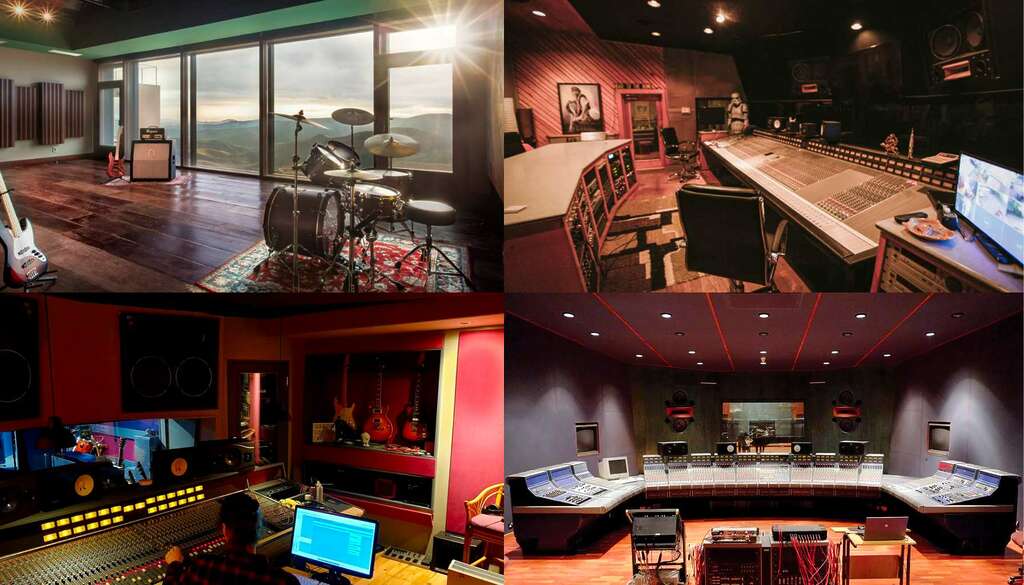
What Are the Best Recording Studios in Baltimore?
Baltimore has always punched above its weight in sound. From J. Robbins’ post-hardcore lineage to the platinum R&B and hip-hop cut in old harbor warehouses, the city’s studios carry decades of credits that bigger markets would envy. If you’re searching for recording studios in Baltimore, you’ll find a deep bench of rooms that range from sunlit, gear-stuffed live spaces in Hampden and Johnston Square to large-format SSL and API consoles just over the county line.
This guide rounds up the best recording studios in and around Charm City — the kind of Baltimore recording studios that working bands, rappers, podcasters, and label clients actually book. Whether you want a one-room studio in Baltimore for a quick vocal session or a full-service music studio in Baltimore for tracking a record, every entry below was verified as operating in 2026. We don’t sell sessions; we explain who does what, where, and what each room is known for.
Table of Contents
- 1. The Magpie Cage — Johnston Square
- 2. Wright Way Studios — Hampden
- 3. Mobtown Studios — Charles Village
- 4. Lord Baltimore Recording — Hampden
- 5. Tempo House Recording — Better Waverly
- 6. The Studios at Stages — Cockeysville
- 7. Sheffield Audio/Video Productions — Phoenix
- Frequently Asked Questions
1. The Magpie Cage — Johnston Square
Best Known For: Producer/engineer J. Robbins and a rock pedigree that runs through indie, punk, and hardcore.
The Magpie Cage is the working studio of J. Robbins, who has owned and operated it since 2002 on the eastern edge of Mt. Vernon in Johnston Square, walking distance from Penn Station. The space was home to the legendary Oz Recording in the 1990s, where bands like Shudder to Think, Girls Against Boys, and Texas Is the Reason made records — so the room comes with real lineage. Its centerpiece is a spacious, sunlit live room with wooden floors and high ceilings, plus ancillary spaces with varied sonic character.
Robbins’ verified client list spans Clutch, the Dismemberment Plan, War on Women, Coliseum, Pentagram, The Sword, and Have Mercy, among many others. If you’re a band chasing a live, dynamic, guitar-forward sound — or any artist who wants a seasoned producer behind the glass — this is one of the most credentialed rooms in the city.
2. Wright Way Studios — Hampden
Best Known For: A large, multi-room commercial facility and one of Baltimore’s deepest credit lists.
Owned and operated by Steve Wright since the late 1990s, Wright Way is a roughly 4,600-square-foot facility on Fawcett Street in the Hampden area, minutes from the harbor. It runs multiple recording spaces — Studios A through D — and handles everything from band tracking, mixing, and mastering to voiceover, audiobooks, podcasts, and audio-for-video. The Baltimore Banner has profiled it as a genuine recording institution in the city.
The studio’s reported credits span an unusually wide range, from R&B acts like Dru Hill and Dawn (of Danity Kane) to metal and experimental work associated with names like Slipknot, U.N.K.L.E., and Misery Index. That breadth makes it a flexible pick whether you’re cutting a polished vocal record or a heavy, layered rock project. Confirm room availability directly, as a large facility like this books across many session types.
3. Mobtown Studios — Charles Village
Best Known For: Artist-friendly recording, mixing, and Grammy-nominated mastering on North Charles Street.
Founded in 2006 and operating from North Charles Street in the Charles Village area since 2008, Mobtown Studios is run by producer Mat Leffler-Schulman and designer Emily Leffler-Schulman. It built its reputation as an approachable, artist-first room for Baltimore-area musicians — a “happy medium” between bedroom DIY and high-cost commercial rooms — and has long been a fixture of the local independent scene.
These days Mat focuses primarily on mastering, where he carries a Grammy-nominated reputation, and the studio points clients toward trusted local engineers for tracking, producing, and mixing. For artists who want polished, competitive masters — or a smaller, comfortable room with deep community roots — Mobtown remains a reliable name. Check current service availability before booking, since the recording side runs through affiliated engineers.
4. Lord Baltimore Recording — Hampden
Best Known For: A full-service, genre-spanning studio attached to the Morphius Records operation.
Lord Baltimore Recording is the in-house studio of Morphius Records, offering recording, mixing, and mastering alongside CD/DVD/Blu-ray manufacturing and distribution. It works across an unusually broad set of genres — indie rock, punk and hardcore, hip-hop, R&B, jazz, gospel, country, classical, EDM, metal, and spoken word — which makes it a one-stop option for artists who want tracking and physical product under one roof.
The studio promotes itself as the only Baltimore room with a recently RIAA-certified platinum album tracked in its own room, a notable credential for a city studio. The label-plus-studio model is the draw here: if you’re an independent artist who wants to record and then actually press and distribute the result, this is a practical fit.
5. Tempo House Recording — Better Waverly
Best Known For: A tall, light-filled live room equally suited to analog and digital sessions.
Tempo House Recording, run by Craig Bowen on Kirk Avenue in the Better Waverly area, is built around three distinct recording environments — including a spacious live room with roughly 25-foot ceilings and plenty of natural light — plus a comfortable control room. It’s equipped for both analog and digital workflows and welcomes outside engineers and producers, so you can bring your own team into the space.
That combination of high ceilings, big sound, and bring-your-own-engineer flexibility makes Tempo House a strong pick for full-band tracking, especially drums and live ensemble sessions where room sound matters. Baltimore acts including Curse have tracked albums there. It’s a good middle option between a tiny project room and a large commercial complex.
6. The Studios at Stages — Cockeysville
Best Known For: A 32-channel API 1608 console and a large live room, just north of the city.
Part of the Stages Music Arts campus on Stenersen Lane in Cockeysville, The Studios at Stages is a premiere large-format room in the greater Baltimore area. Its Studio B centers on a 32-channel API 1608/1608EX automated console, paired with a roughly 24′ x 33′ live room with 16-foot ceilings and two isolation booths with sightlines into both the live room and the control room.
The room is stocked with an extensive outboard and microphone collection, a house drum kit, bass and guitar amps, a Nord Stage 2, and even a modified Leslie 122 rotating speaker cabinet — the kind of gear depth that lets bands walk in light. With monitoring across Focal, Meyer, and Avantone systems, it’s aimed at artists who want a true professional console experience without driving out of the metro.
7. Sheffield Audio/Video Productions — Phoenix
Best Known For: A 1968-founded legacy facility with a flagship SSL Duality Fuse room and an on-site recording school.
Sheffield Audio/Video Productions, on Sunnybrook Road in Phoenix just north of Baltimore, has provided media production since 1968 and remains one of the region’s most established studios. Its 20,000-square-foot complex houses two commercial recording studios, a 2,000-square-foot video soundstage, and the Sheffield Institute for the Recording Arts. Studio A, the flagship, runs a 48-fader SSL Duality Fuse SuperAnalogue console installed in 2023, with a 48-track Pro Tools HD system.
For artists or labels who want a true large-format analog-meets-digital session — or production that combines audio with video — Sheffield’s scale and longevity are hard to match locally. It’s a Baltimore County destination rather than a downtown room, but the console, the square footage, and the decades of history put it firmly among the area’s best.
Frequently Asked Questions
How much do recording studios in Baltimore cost?
Rates vary widely by room, engineer, and session type, and most Baltimore studios quote per project rather than publishing fixed prices. A smaller project room booked for vocals or a podcast will cost far less than a full day in a large-format console room with an engineer. The honest answer: contact the studio directly with your project scope — songs, instruments, and how many days — and ask for a quote. Many rooms offer block rates or package pricing for full records.
What’s the best Baltimore recording studio for beginners?
Artist-friendly rooms like Mobtown Studios and Tempo House Recording are good entry points — both are used to working with independent and first-time clients, and they’ll bring an engineer who can guide you through the process. The most important thing for a beginner isn’t the biggest console; it’s an engineer you communicate well with, so reach out, describe your goals, and book a room where you feel comfortable.
Which studio in Baltimore is best for hip-hop or rock?
For rock and heavier guitar music, The Magpie Cage (J. Robbins) and Tempo House are standouts thanks to their live rooms and producer experience. For hip-hop and R&B, Wright Way Studios and Lord Baltimore Recording both have deep credits across vocal-driven genres, and Mobtown’s mastering is a strong final-stage option. Match the room to the sound you’re chasing and the engineer’s track record.
Do you need to be signed to book a recording studio in Baltimore?
No. Every studio in this guide works with independent and unsigned artists — that’s the bulk of most Baltimore sessions. You book directly as a paying client regardless of label status. Some rooms, like Lord Baltimore through Morphius, can even help with manufacturing and distribution if you want to release the finished record yourself.
What’s the most famous recording studio in Baltimore?
It depends on the scene you’re in. The Magpie Cage is the city’s most celebrated rock room thanks to J. Robbins’ reputation, while Wright Way Studios is one of the most established commercial facilities with a broad credit list across R&B and metal. Just outside the city, Sheffield has the longest history of all, operating since 1968.
Written by Alex Tarlescu for Get More Streams. Studio details reflect publicly available information as of 2026; availability, services, and ownership can change, so confirm directly with each studio before booking.